

Labor export: No new licenses will be issued for 5 years to businesses that violate regulations.
To prevent "circumvention of the law" in licensing, the Law adds a provision that enterprises (or their legal representatives) whose licenses have been revoked due to serious violations will not be allowed to apply for a new license for a period of 5 years.
On the morning of September 10th, in Hanoi, the Office of the President held a press conference to announce the President's order promulgating 15 laws passed by the 16th National Assembly, at its first extraordinary session.
Among the 15 laws, notably, there is a law amending and supplementing several articles of the Law on Vietnamese Workers Working Abroad under Contract. The new contents of the Law were presented by Deputy Minister of Home Affairs Vu Chien Thang at a press conference announcing the law on September 10th.
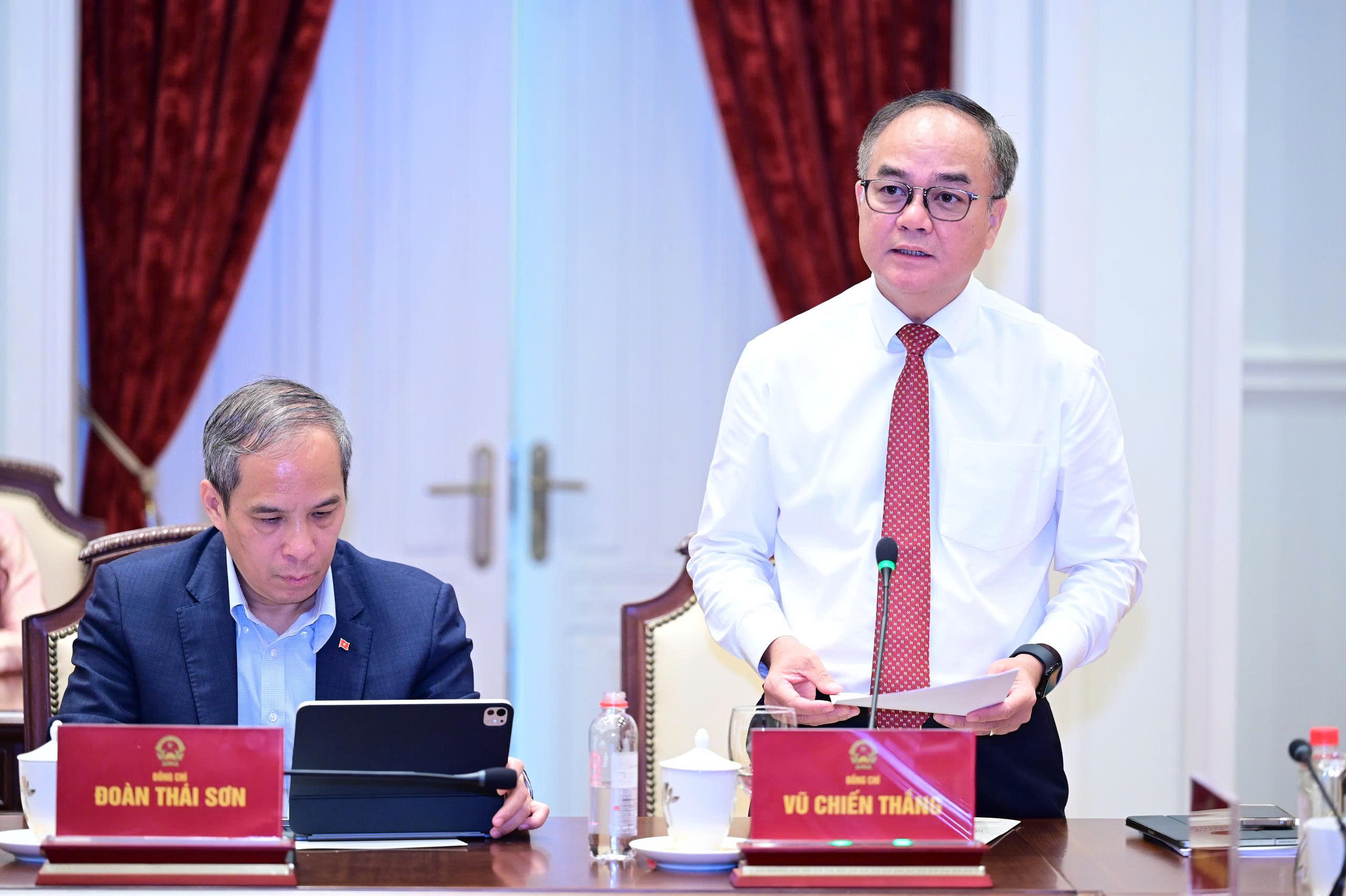
The new provisions of the Law were presented by Deputy Minister of Home Affairs Vu Chien Thang at a press conference announcing the law. Photo: Tong Giap
Transparency in revenue collection from workers.
The Deputy Minister stated that the Law has institutionalized the shift in thinking from "operational management" to "development creation," from "pre-auditing" to "post-auditing," promoting decentralization, digital transformation, and better protecting workers.
Regarding the specific content, Mr. Vu Chien Thang stated that, first of all, the amended Law establishes a policy prioritizing the development of high-quality human resources through perfecting the "labor cycle".
The law prioritizes sending trained workers with technical and professional qualifications to work abroad in order to increase their income, acquire modern production and management technologies, and improve their skills, foreign language proficiency, and industrial work ethic.
At the same time, there should be mechanisms to strengthen job connections for returning workers with the domestic labor market, matching the skills and experience they have accumulated while working abroad.
The Deputy Minister of Home Affairs emphasized that the Law has made transparent the collection of fees from workers. The Law assigns the Minister of Home Affairs the authority to specify the fees that service businesses are allowed to collect from workers and the model contract for sending workers abroad; service fees and other fees (if any) must be clearly stated in the contract signed between the business and the worker.
Furthermore, training fees for vocational skills and foreign language development during the recruitment phase must be stipulated in the signed agreement with the worker and may only be collected after the worker has been selected by the foreign employer; any unauthorized collection of fees is strictly prohibited.
The law shifts the management mechanism from "pre-inspection" to "post-inspection," and from "registration" to "notification"; and significantly reduces administrative procedures.
"The law abolishes the labor force preparation approval procedure, creating conditions for businesses to proactively prepare labor resources according to market demand; it shifts the registration mechanism to a 'notification' mechanism for businesses that win bids, receive contracts, and organizations and individuals investing abroad," Mr. Thang informed.
More importantly, the Law does not create new administrative procedures; it abolishes 3 procedures, reduces and simplifies 6 procedures, and lowers compliance costs for citizens and businesses by 34%.
Expanding the list of prohibited behaviors.
Next , the Law Promoting decentralization. The Law amending and supplementing a number of articles of the Law on Vietnamese workers working abroad under contract has selectively decentralized certain tasks, which have been effectively implemented according to Decree No. 128/2025/ND-CP.
This involves the provincial People's Committee receiving notifications and reports from enterprises that have won bids, received contracts, and organizations and individuals investing abroad; and registering contracts for receiving trainees and direct labor contracts.
The People's Committee at the commune level receives notifications, publicizes them, monitors labor resource preparation activities in the area, and handles violations within its authority, addressing "bottlenecks" in the recruitment process at the grassroots level.
Law Digital transformation and data are the pillars of management and supervision. The Ministry of Interior builds, operates, connects, and shares databases; it stipulates that businesses are responsible for updating and publicly disclosing information on personnel, recruitment, working conditions, employee rights, and preparing resources for employees to search, choose, and create a basis for post-audit by management agencies.
The law tightens market discipline and improves the legal framework for handling violations. Accordingly, the law adds the concepts of "direct recruitment" and "allowing others to use the license"; expands the prohibited acts such as providing false information, deceptive advertising and consulting, collecting money improperly, organizing recruitment, and preparing resources for prohibited jobs or areas;
The law stipulates a five-year restriction on businesses and their legal representatives whose licenses have been revoked due to serious violations; it also adds provisions on coordination between the Ministry of Interior and the Ministry of Public Security in preventing, detecting, and handling violations, including the period before departure and during work abroad.
The law will come into effect on March 1, 2027.
_Collect_