
Expanding the Policy Runway to Support Green Growth in Maritime and Inland Waterway Transport
From land-rent exemptions and tax incentives to support for human resources and technology, the draft Law on Maritime and Inland Waterway Transport is proposing a broader policy framework to accelerate the sectors’ green and digital transition.
Channeling Resources into Strategic Areas
Vietnam’s Ministry of Construction is seeking public feedback on the draft Law on Maritime and Inland Waterway Transport, which introduces a dedicated chapter setting out a comprehensive framework for incentives and support measures for the development of the maritime and inland waterway sectors.
The proposed provisions cover eligible beneficiaries, areas of support, eligibility requirements and mechanisms for implementing development incentives. Notably, projects focused on green transition and digital transformation would be eligible for a range of preferential policies.

The addition of new support measures is intended to institutionalize the Party’s policy of developing Vietnam into a strong maritime nation. (Photo: Gemalink)
According to the Ministry of Construction, the new chapter is designed to institutionalize Politburo Resolution No. 20-NQ/TW on building and developing Vietnam into a strong maritime nation, as well as Notice No. 125 issued by the Party Central Committee Office, conveying the conclusions of General Secretary and President To Lam at a meeting with relevant agencies on the development of Vietnam’s national maritime industry.
Focusing Support on Key Industry Players
The draft law clearly identifies priority groups eligible for incentives and support. These include strategic investors; companies investing in fleet development and transport services; businesses operating in the maritime, inland waterway and supporting industries; organizations and individuals engaged in green and digital transformation, science, technology and innovation; as well as training institutions and other entities involved in human-resource development.
According to the drafting agency, the provisions are intended to provide a basis for concentrating resources on critical segments of the maritime ecosystem, including shipping, logistics, shipbuilding and related supply chains, in line with the goal of strengthening Vietnam’s national capacity at sea.
Alongside the identification of priority groups, the draft introduces incentives related to land, water surfaces and marine areas for projects undertaken by strategic investors, as well as facilities involved in newbuilding, conversion, upgrading and repair of ships and boats, and institutions providing human-resource training.
For inland waterways, the draft proposes that companies investing in and operating inland waterway ports be exempt from land and water-surface rental fees for 10 years from the date of the decision to lease the land or water surface for project implementation.
The draft also proposes prioritizing the use of suitable riverbanks and sandbars, where consistent with planning requirements, for the development of shipbuilding industrial facilities, subject to ensuring adequate flood drainage capacity and dyke safety.
Supporting Students and Attracting High-Quality Talent
Another key proposal focuses on developing the human resources needed by the maritime and inland waterway sectors.
Under the draft, students in priority groups could receive support covering tuition fees, scholarships, preferential loans, accommodation and living expenses. The policy package would also support training, retraining, vocational upskilling and technology transfer.
The draft further proposes mechanisms to attract, retain and provide preferential treatment to experts, scientists, engineers, managers, shipmasters, chief engineers and highly skilled technical workers in the maritime and inland waterway sectors.
Alongside human-resource policies, the draft introduces preferential customs and tax procedures for goods imported and exported under projects implemented by strategic investors.
It also proposes support mechanisms for the testing, assessment, inspection, certification and commercialization of new technologies and innovative models in the maritime and inland waterway sectors, with the aim of facilitating the deployment of new solutions.
Incentives for Green Transition Projects
Notably, projects focused on green and digital transformation have been identified as a priority group for preferential treatment.
Under the proposal, enterprises and organizations implementing green-transition projects or tasks in maritime and inland waterway operations would be exempt from land-rental fees, water-surface rental fees and fees for the use of marine areas covering the areas directly used for project implementation.
In terms of taxes, fees and access to credit, green-transition projects would be eligible for a proposed five-year corporate income tax exemption, beginning when the project is completed and enters operation.
Projects would also be exempt from import duties on machinery, equipment, components, spare parts, raw materials, supplies and specialized vehicles that are not domestically available, where these are used to create fixed assets or directly support project operations.
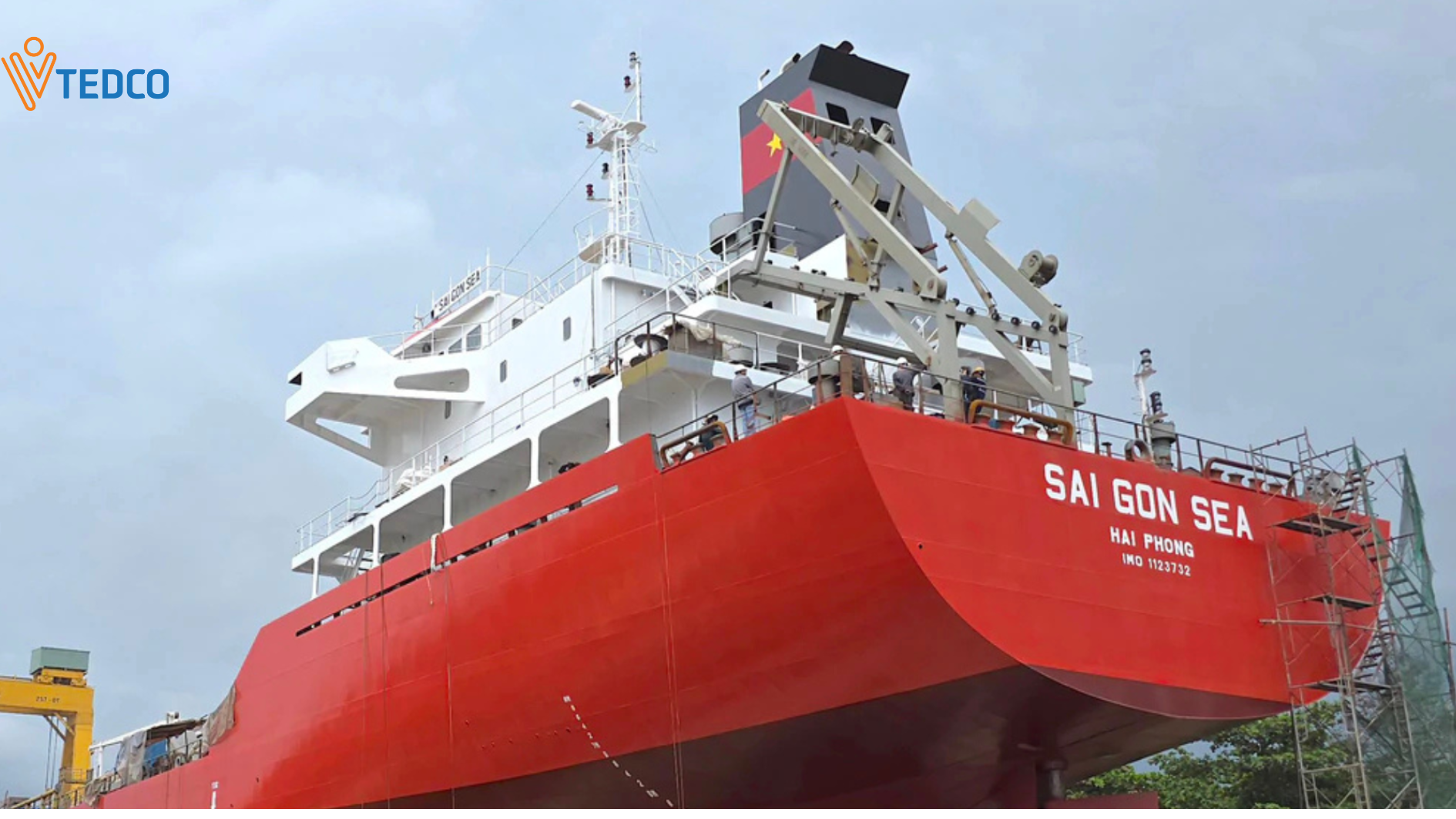
The proposed incentives would extend beyond projects to include vessels employing low-emission technologies and alternative energy sources.
Under the draft, seagoing and inland waterway vessels powered by electricity, alternative fuels or renewable energy, or equipped with energy-efficient and emissions-reduction technologies, would be exempt from vessel registration fees and first-registration registration tax, as well as tonnage-related fees, for five years from the date of registration.
Organizations and individuals investing in facilities for the construction or conversion of seagoing and inland waterway vessels using electric power, alternative fuels, renewable energy, energy-saving or emissions-reduction technologies, green technologies or autonomous vessel technology would also be eligible for proposed corporate income tax and value-added tax incentives.
The Government would determine the level and duration of incentives applicable to each type of vessel, taking into account the characteristics of the vessel, policy priorities, the development stage and the State’s capacity to allocate resources.
Incentives for Multimodal Transport
The draft also proposes measures to promote multimodal transport.
Under the proposal, Vietnamese enterprises providing multimodal transport services that include maritime or inland waterway transport would be entitled to a 50% reduction in corporate income tax payable on income derived from multimodal transport operations.
For cargo transported by sea or inland waterways, the draft proposes exemptions from charges for the use of infrastructure, service facilities and public utilities, as well as other locally prescribed fees and charges applicable to maritime and inland waterway freight transport, except for maritime charges and fees.
According to the drafting agency, these provisions would establish a legal framework to encourage technological innovation, energy transition, fleet development and the modernization and greening of Vietnam’s maritime industry, while strengthening its competitiveness.
Importantly, to ensure that preferential policies are implemented in line with their intended objectives, transparently and with appropriate oversight, the draft also provides for the termination and repayment of incentives and support where beneficiaries no longer meet the eligibility requirements or fail to comply with their commitments.
_Collect_