
Labor Export - A High Opportunity for Human Resource Development
Labor export is not simply about earning a high income; more importantly, it helps workers return with a stable profession, work experience, management skills, and the ability to adopt new technologies – that is the long-term value for the nation and an opportunity for high-level human resource development.
If effectively utilized, the skilled labor export force will be a crucial resource for improving labor productivity and the competitiveness of Vietnamese businesses.
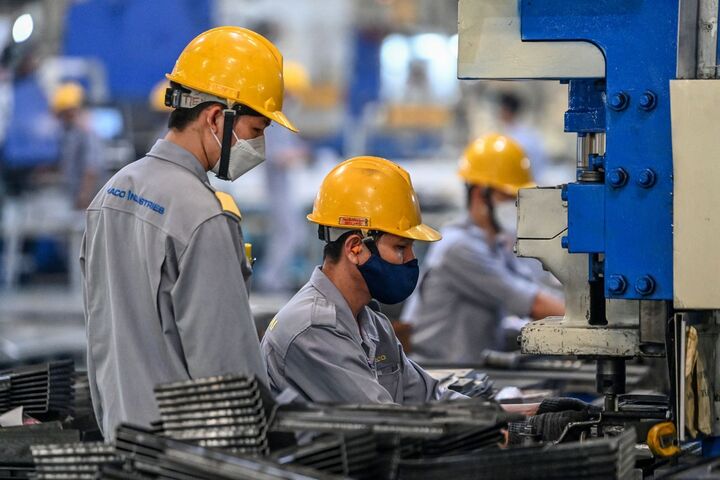
Many key labor markets are experiencing labor shortages and are seeking labor cooperation with Vietnam. (Illustrative image: VGP)
Vietnamese workers are increasingly meeting the requirements of high-standard markets.
The policy of sending workers abroad is shifting significantly from simply addressing unemployment to focusing on developing high-quality human resources. This is a crucial strategy for human resource development, emphasizing careful selection and ensuring that workers bring new skills, professional work ethics, and modern thinking to serve the nation's key industries upon their return.
Minister of Home Affairs Nguyen Tien Hai stated that the policy of sending Vietnamese workers abroad under contract is a "dual" policy, both sending skilled and specialized workers overseas and establishing mechanisms to attract and effectively utilize this human resource upon their return to the country.
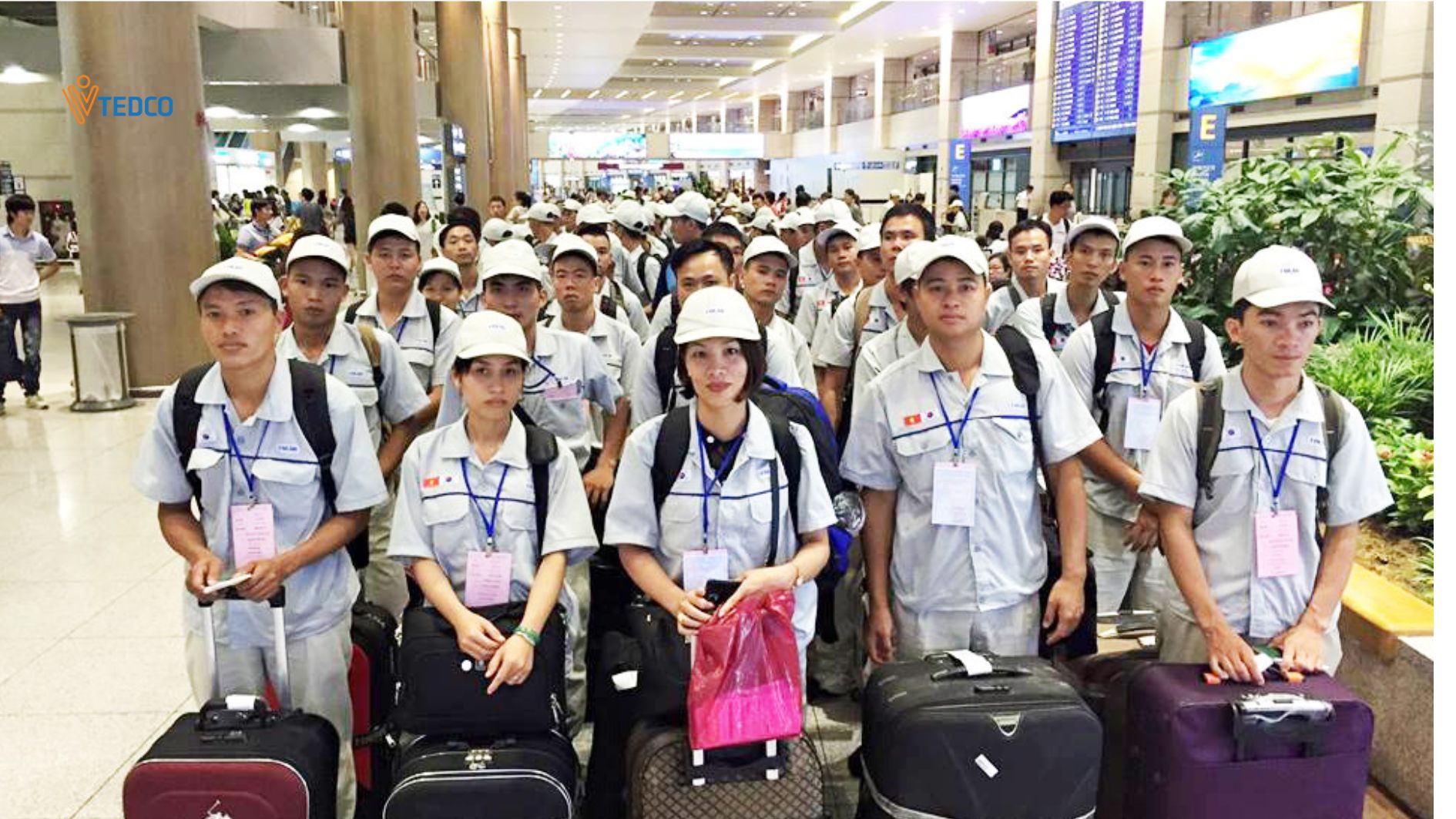
Figures show that in 2025, Vietnam sent 144,345 workers abroad under contract, exceeding the set plan by 11%. Japan continued to be the largest receiving market with over 64,600 workers, followed by Taiwan (China) with over 57,000 workers and South Korea with over 11,600 workers.
This is not only a positive result in terms of job creation, but it also shows that Vietnamese workers are increasingly better able to meet the requirements of high-standard markets.
Entering 2026, despite the impact of fluctuations in the international labor market, in the first six months of the year, the whole country sent 66,311 workers to work abroad under contract, achieving 59.2% of the annual plan.
Based on practical experience in labor export, Mr. Dinh Thanh Binh, Deputy Director of Mai Linh Labor Export Center, believes that the advantage of Vietnamese workers in the future lies not in quantity but in quality. Those who accumulate skills, foreign language proficiency, and industrial work ethics while working in Japan or South Korea will have many opportunities for development upon returning to Vietnam.
This is the kind of human resource that domestic businesses urgently need in the context of digital transformation, the development of high-tech industries, and deep integration into global supply chains.
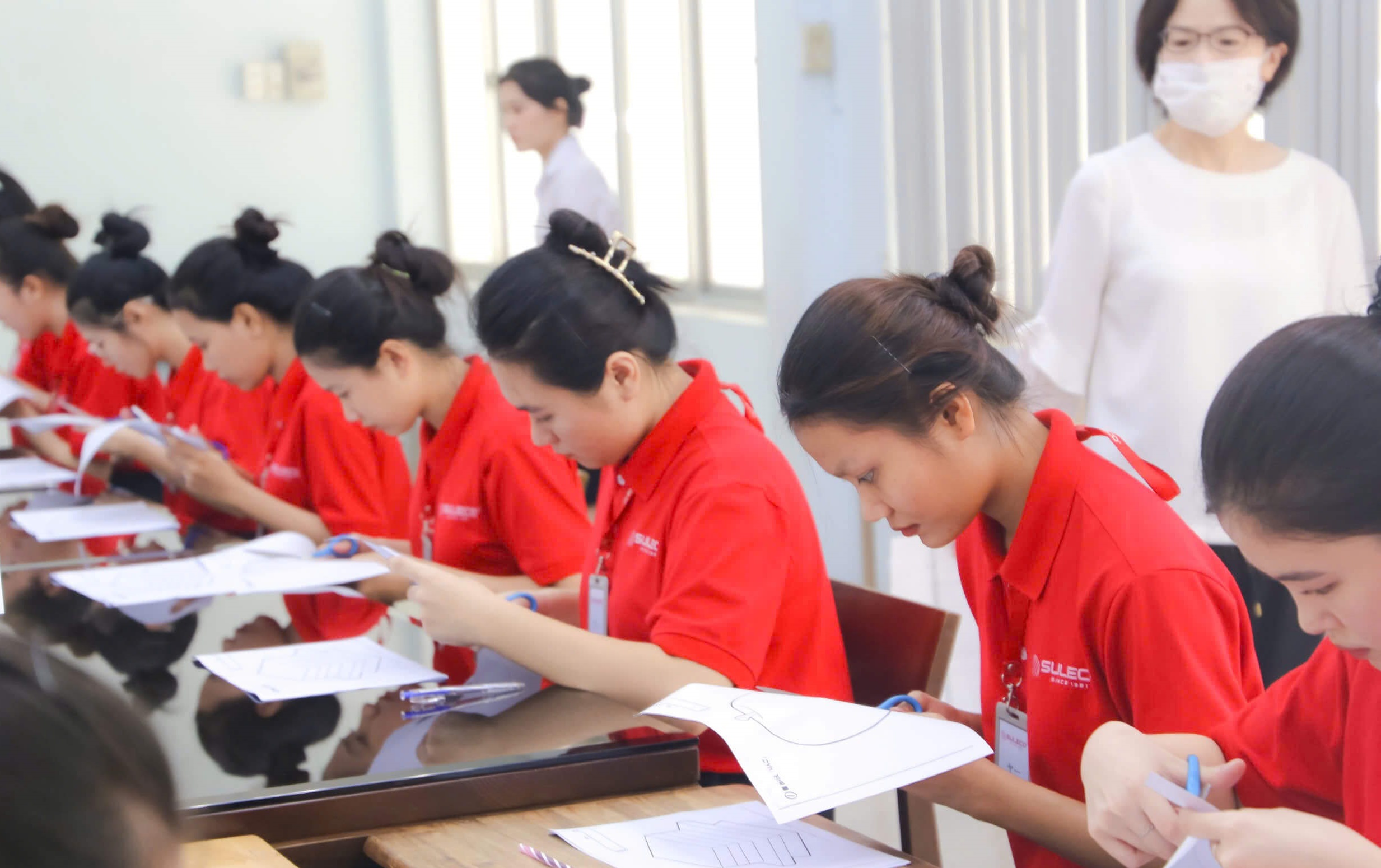
Many Japanese companies prioritize hiring Vietnamese workers. (Illustrative image: Suleco)
Labor export: An investment strategy for human resources.
In fact, promoting the overseas employment of trained and skilled workers has been bringing "double" benefits to both the workers and the economy . After their time working abroad ends, the skilled workers returning home become an important source of supply for businesses in particular and the economy in general, because at that time, they not only have skills but also experience and discipline gained from working for a long time in a professional environment abroad.
This is a resource that enables businesses to accelerate the application of technological advancements and build a disciplined and efficient work environment.
Therefore, many experts believe that labor export should be viewed as a strategic investment in human resources, rather than just a short-term job creation activity. The Law on Overseas Workers under Contract (amended), recently passed by the National Assembly , also aims to more strongly institutionalize the Party and State's policy on human resource development; considering overseas labor as a channel for human resource training through a modern, disciplined working environment in developed countries. The experience and skills accumulated will become a valuable resource for national development. In the context of international labor integration, this is a strategic vision for building and developing national human resources.
Based on that reality, former Minister of Labor, War Invalids and Social Affairs Dao Ngoc Dung argued that while pre-departure skills training is the foundation, the ability to transform what is learned during overseas employment into competence upon returning home is the true measure of a labor journey's value. Upon returning, one must aim for "mastery." Mastery here doesn't just mean owning a business, but first and foremost, mastering one's profession, science , and technology.
In fact, many workers, after working abroad, have returned to build their lives and establish well-structured businesses, becoming business owners or managers. These results show that the value of labor export lies not only in income but also in the amount of knowledge, skills, and experience that workers accumulate.
This is also why Mr. Dao Ngoc Dung believes that a change in perspective on labor cooperation is needed in the new era. Vietnam needs to continue expanding opportunities for young people to study and work in many high-quality international markets.
"That includes pre-departure training, career preparation before departure; language training, professional conduct and work skills; and attention to the growth and future of young people after they return," Mr. Dung said.
This issue becomes even more noteworthy as Vietnam enters a period of population aging, while its economy is accelerating and the demand for human resources in industry, trade, and services is constantly changing. According to Mr. Le Quang Trung, former Deputy Director in charge of the Department of Employment, Vietnam needs to learn from the experiences of Japan and other countries facing demographic challenges to proactively prepare its human resources. Furthermore, this is a process of improving the quality of Vietnam's human resources.
By the end of 2026, the Department of Overseas Labor Management aims to send approximately 150,000 people to work abroad. In the long term, success should not be measured solely by the number of people who go abroad or the amount of remittances brought back. A more important measure is how many workers, upon returning, can become a core workforce in businesses, bringing with them modern technology, skills, and production thinking to contribute to improving national labor productivity.
According to Deputy Minister of Home Affairs Vu Chien Thang, the goal for 2030, with a vision to 2045, is not only to maintain scale but also to improve quality and shift strongly towards skilled labor. In the era of globalization and digital transformation, high-quality human resources are considered a "gold mine" for each nation. As competition between economies increasingly relies on the quality of human resources, labor export should be viewed as a strategy of investing in people, creating a foundation for the sustainable development of businesses and the Vietnamese economy.
_Collect_