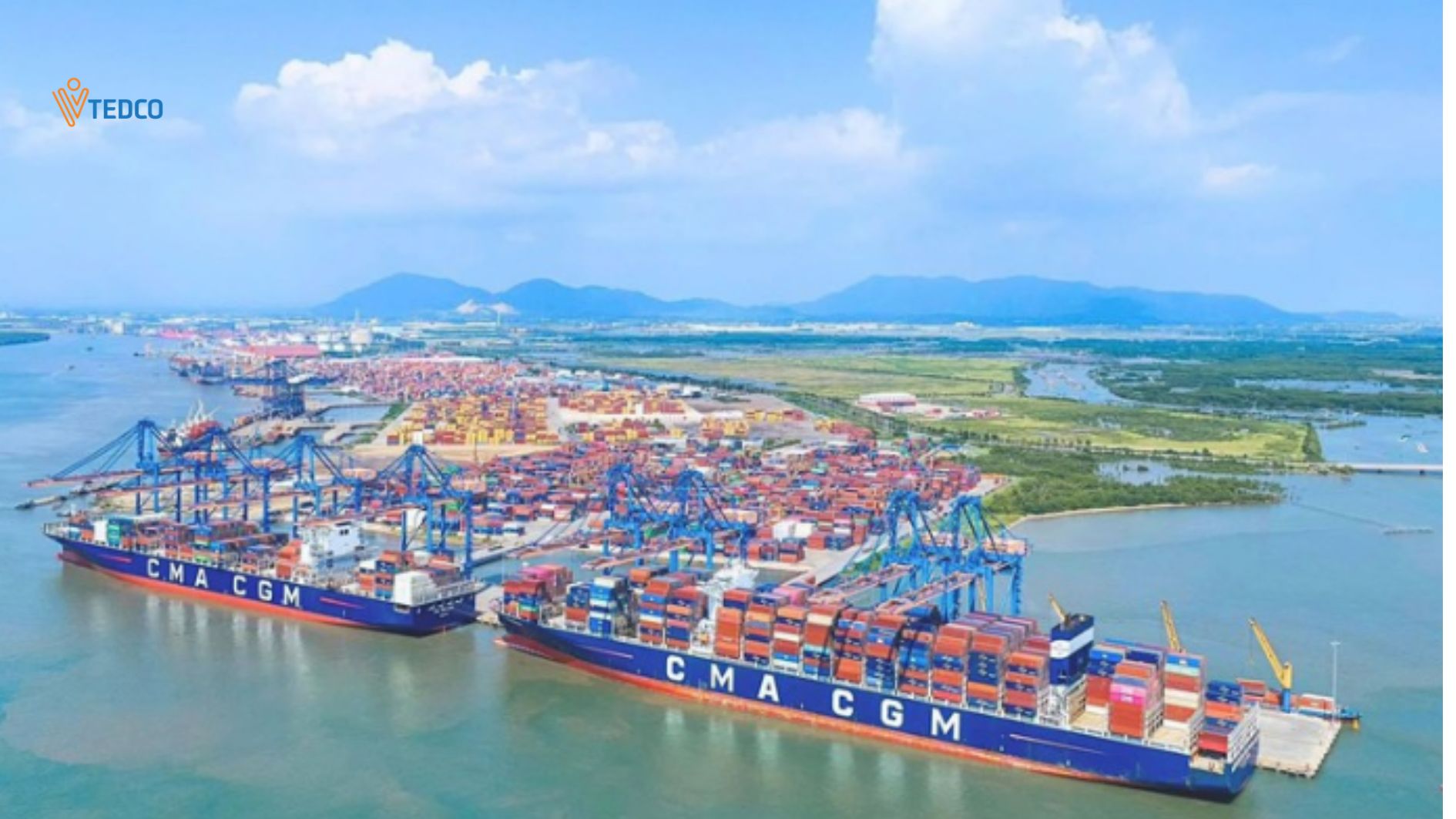

Many migrant workers returning home want to go back to the country where they used to work.
Among the group of migrant workers returning home who intend to migrate again to seek employment, the majority wish to return to work in the country where they previously worked (accounting for 68.9%).
The above figures were presented in the In-depth Report on Vietnamese Workers Working Abroad, recently published by the General Statistics Office. The survey results show that over 412,000 Vietnamese workers have gone to work abroad in the past three years.

Among the group of migrant workers returning home who intend to migrate again to seek employment, the majority wish to return to the country where they previously worked. (Illustration: Tong Giap)
Going abroad for work: Relatively young age structure.
Although Vietnamese workers are present in 42 countries and territories worldwide, they are still mainly concentrated in three East Asian markets: Japan, South Korea , and Taiwan (China), accounting for 76.7% of the total number of Vietnamese workers going abroad.
The survey results also showed that migrant workers going abroad for work mainly come from rural areas, are relatively young, and most have graduated from high school; with a median age of about 27 years old, and almost no difference between men and women.
This is also reflected in the increase in the proportion of young workers (aged 15-24) from 31.4% to 35.0%, a corresponding increase of 3.6 percentage points.
Meanwhile, under the impact of population aging due to increased life expectancy and a prolonged decline in birth rates, the age structure of the domestic workforce is shifting towards older age groups, as evidenced by the median age increasing from 40 to 42 years.
The trend of younger migrant workers is also reflected in the increase in the proportion of unmarried workers during the observation period, from 52.4% to 61.1%, a corresponding increase of 8.7 percentage points.
Regarding income, surveys of salaries by education level show that income does not increase uniformly with education level, but rather shows a clear disparity among those with higher education levels.
By 2025, the income of workers with a college degree or higher will reach 42.6 million VND, significantly higher than other groups.
Meanwhile, groups from below middle school to high school have fairly similar income levels, ranging from 22 to 26 million VND. The difference between these groups is not significant, indicating that income only improves noticeably when workers achieve a relatively high level of professional qualifications (from college level or higher).
This indicates that income advantage is primarily concentrated among highly skilled workers, while income differences among lower-educated groups remain insignificant.
The most common occupation among repatriated workers is that of craftspeople.
Providing job support for returning migrant workers. This is crucial in helping workers quickly reintegrate into the domestic labor market, reducing the risk of unemployment and financial pressure after repatriation.
The survey results show that 90.9% of migrant workers received at least one form of employment support after returning home. Particularly in the two major cities of Hanoi and Ho Chi Minh City, the percentage of migrant workers receiving employment support was very high, at 97.7% and 98.4% respectively.
The most common occupation among returning workers is craftspeople, accounting for nearly 31%; followed by sales, services, and security, at around 25%. Meanwhile, just over 5% found jobs requiring technical skills, including 3% at the high level and 2% at the mid-level.
Regarding workplaces, nearly 33% of repatriated workers are employed in the private sector, 21% are self-employed or run family businesses, 8% are paid daily or hourly wages, and only 3% are in the public sector.
These figures reveal a rather clear paradox: Workers gain more experience after years abroad, but their jobs upon returning home may not necessarily be commensurate with their skills.
When experience is available but difficult to translate into a better position, returning to a previous workplace becomes an understandable choice. In Japan , they are already familiar with the work environment, have professional experience, and don't have to start everything from scratch.
Regarding the intention to continue working abroad after returning home, the survey shows that 22.6% of workers intend to do so again. While the majority of workers (60.2%) do not intend to migrate again, 17.2% are unsure whether they will migrate again within the next 12 months.
Among the returning migrant workers intending to migrate again to seek employment, the majority wish to return to their previous country of work (accounting for 68.9%), with a high percentage wishing to return to Japan for work.
Only 14.6% of workers surveyed indicated their intention to migrate to other countries; and 16.5% wished to migrate to other provinces or cities within the country to work.
Japan is paving the way for workers to return.
The desire of Vietnamese workers to return to Japan also stems from market factors. Currently, Japan remains the largest receiving market for Vietnamese labor, accounting for 42.2% of the total number of Vietnamese workers abroad. In 2025 alone, this market is expected to attract more than 64,600 Vietnamese workers.
Recently, Japan has continued to adjust its foreign worker acceptance policy by expanding the sectors with high labor demand. The Specified Skilled Worker (SSW) program has added three new sectors: textile services, logistics, and resource recycling, bringing the total number of accepted sectors to 19. The target for the 2024-2029 period is 805,700 workers.
From April 2027, Japan will also implement the Employment Skills Development Program (ESD) with 17 recruitment fields, expected to recruit 426,200 people between 2027 and 2029.
For workers with 3-5 years of experience, these changes open up more options regarding residency status and long-term employment paths. This is also a key difference compared to their first overseas trip: they return with their accumulated experience and face a market that still needs manpower.
_Collect_