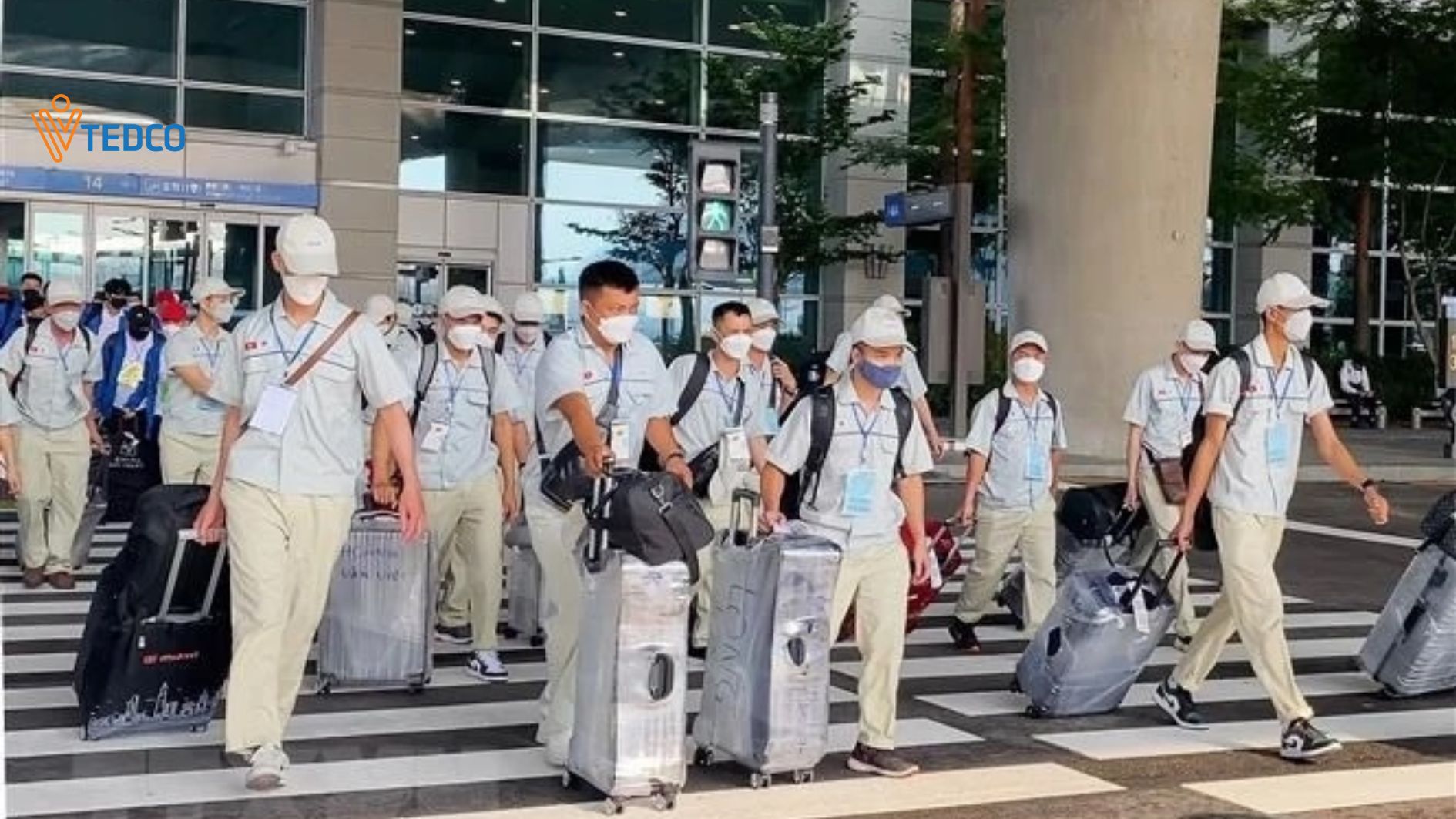

Priority should be given to sending highly skilled workers to work abroad
Skilled and technically qualified workers are given priority to work abroad, increasing their income, accessing modern technology, and receiving support in finding employment upon their return
On the morning of August 24th, the National Assembly passed the Law amending and supplementing a number of articles of the Law on Vietnamese workers going to work abroad under contract, which will take effect from March 1st, 2027.
The law supplements the policy of prioritizing the placement of trained workers with professional and technical qualifications to work abroad. Besides increasing income, workers can improve their vocational skills, learn foreign languages, and gain access to modern technology, management methods, and work practices.
Workers in certain professions requiring specialized skills, technical expertise, or in sectors prioritized by the State will benefit from specific policies when working abroad. The Government will specify these policies in accordance with the socio-economic conditions of each period. After returning home, workers will be supported in connecting with the domestic job market.
The government stated that this policy aims to leverage the skills, experience, and technological knowledge accumulated abroad. Prioritizing skilled labor does not create barriers for unskilled or untrained workers. Priority sectors and markets will be selected to align with economic development needs, diplomatic strategies, and domestic human resources.
The law also stipulates that workers are not required to pay social insurance or personal income tax twice in Vietnam and the receiving country if the two countries have signed an agreement that avoids double paying social insurance or taxes.

Cleanroom, Nano and Energy Center, Faculty of Science, Vietnam National University, Hanoi, a training and research center for semiconductors
Waiting time for departure should not exceed 180 days.
According to the amended law, businesses must provide a written commitment regarding the waiting period for departure, up to a maximum of 180 days from the date the worker is selected. If they fail to send workers abroad within the agreed timeframe, businesses must compensate according to the agreement, refunding service fees and any other payments made by the worker after deducting expenses incurred. This regulation does not apply in cases of force majeure or other agreements between the parties. The Minister of Home Affairs will specify the timeframe within which businesses must compensate and refund workers.
The new regulations also apply to cases where businesses fail to fulfill their commitments regarding the waiting time for departure before March 1, 2027, but have not yet compensated or refunded the money by the time the law takes effect. The law also tightens regulations on collecting fees during recruitment and training. Before preparing a workforce, businesses must sign a document with the workers, clearly stating the fees for vocational training, language training, and other charges, if any.
The document must specify the target market and industry, selection criteria, recruitment timeline, and the responsibilities of each party if the worker is not selected or withdraws before the deadline. Those who have participated in the preparatory program should be given priority in the selection process.
Businesses are only permitted to collect training fees for vocational skills and foreign languages after workers have been selected by foreign companies and signed contracts to work abroad. The contract between the business and the worker must also clearly state service fees, other charges, security deposits (if any), conditions for unilateral contract termination, dispute resolution procedures, and compensation for damages.
The government stated that these regulations aim to publicize costs, control all revenue collected by businesses, and restrict unauthorized collection or renaming of fees that disadvantage workers. Businesses must notify the People's Committee of the commune where recruitment and training are conducted at least three days in advance. The commune-level authorities are responsible for publicizing information, monitoring activities in their area, and handling or referring violations to the competent authorities when detected.
Sending workers abroad to work as masseurs is prohibited.
The law includes additional regulations to prevent fraud, illegal brokering, human trafficking, and forced labor. Businesses must directly recruit workers or coordinate with foreign organizations to receive them; they are not allowed to recruit through third parties or authorize other organizations or individuals to do so. Businesses are also prohibited from allowing other organizations or individuals to use their licenses to send workers abroad.
Acts of coercion, enticement, false promises, deceptive advertising, fraudulent consulting, or providing false information to deceive workers are strictly prohibited. Businesses are also not allowed to collect service fees or other charges contrary to regulations.
The law prohibits Vietnamese workers from going abroad for employment or businesses from recruiting, preparing, and sending workers abroad to work as massage therapists. This regulation also applies to areas experiencing conflict or places that Vietnamese authorities advise against or restrict travel to. Non-profit organizations that send workers abroad are prohibited from charging service fees.
Businesses must publicly disclose the number of vacancies, qualifications, working conditions, rights and obligations of employees, and information on sourcing potential candidates on their websites. Businesses must also have a representative abroad to provide support and handle any arising issues.
In the event of an incident threatening the life, health, or rights of workers, or an emergency related to security and safety in the host country, the enterprise must immediately report it to the competent authorities and Vietnamese representative agencies abroad. Workers in need of legal assistance must be advised and guided on how to access assistance services.
Businesses whose licenses are revoked due to certain violations will not be re-issued a license for 5 years. The legal representative of this business will also not be allowed to act as a representative for any licensed business during the same period.
Besides protecting workers, the law decentralizes some procedures to local authorities. Workers who directly sign contracts with foreign entities must register their contracts with the specialized labor agency under the People's Committee of the province where they reside.
Businesses that send workers abroad for training and skills development must also register their contracts with the specialized labor agency under the Provincial People's Committee where their headquarters are located. These changes aim to bring procedures closer to citizens and businesses and align with the decentralization of management.
For ethnic minorities, people living in ethnic minority and mountainous areas, or areas with special difficulties, the Ministry of Interior, in coordination with the Ministry of Ethnic Minorities and Religion, implements policies to support overseas employment. This group of workers also receives support for social reintegration and participation in the job market after returning home.
_Collect_