
Removing Bottlenecks, Shaping Strategic Seaports for Vietnam’s Maritime Sector
From seaports stretching along the country’s coastline to large-scale deep-water ports planned across the northern, central and southern regions, strategic port clusters are taking shape as vital links in a dynamic trade network, connecting Vietnam to global supply chains.
Strategic Gateways for Vietnam’s Maritime Ambitions
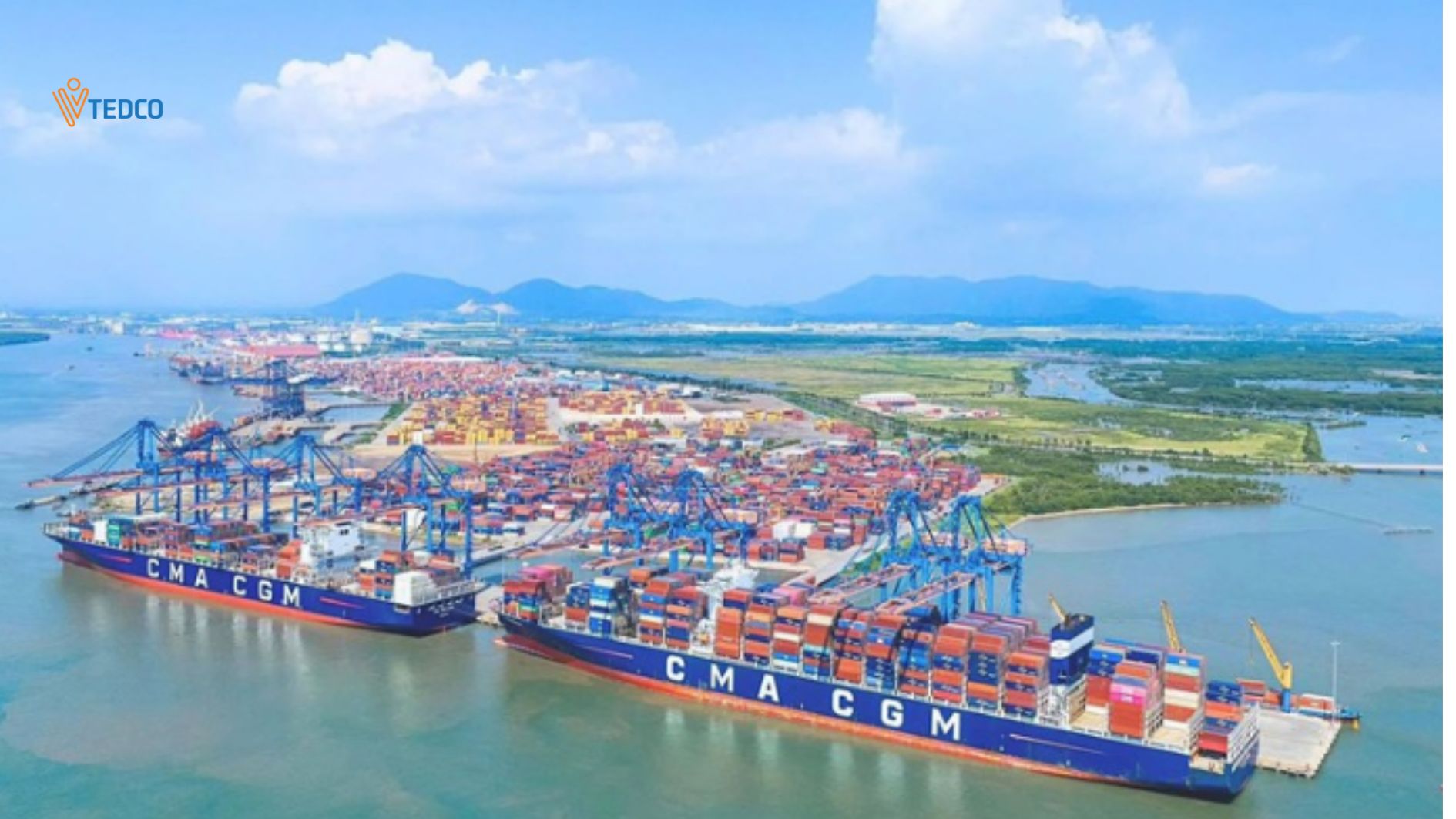
Every week, Lach Huyen port area in Hai Phong is bustling with dozens of mainline container vessels calling at its terminals. Six berths are operating in a coordinated manner, making a significant contribution to regional economic growth. Meanwhile, procedures are underway for the planned development of Berths 7, 8, 9 and 10, paving the way for their investment and construction.

To turn the planning’s breakthrough orientations into reality, a coordinated approach is needed across infrastructure, institutions, resources and implementation capacity. (Illustrative photo)
Under the Master Plan for Vietnam’s Maritime Infrastructure for the 2021–2030 period, with a vision to 2050, Lach Huyen is identified as a priority port area for investment through 2030. Alongside it, Nam Do Son Port is envisioned as a new growth catalyst and has also been prioritized for development.
If northern Vietnam has Lach Huyen and Nam Do Son, the central region has Lien Chieu, while the south is anchored by the Cai Mep–Thi Vai deep-water port complex and the Can Gio International Transshipment Port. Together, these strategic port locations across the northern, central and southern regions reflect Vietnam’s increasingly clear ambition to expand its maritime reach and strengthen its position in global trade.
According to Tran Khanh Hoang, General Director of the Ports & Logistics Division at ITC Corporation, developing deep-water ports across the three regions is a strategic step. Nam Do Son and Lach Huyen have significant potential to become a major port, trade and logistics hub for Hai Phong. The area benefits from its proximity to the sea and short navigation channels, which can help reduce channel maintenance costs, while also offering strong road connectivity and considerable appeal to foreign direct investment (FDI).
Moving into central Vietnam, Lien Chieu Port in Da Nang is planned to become an international gateway port for the central coastal region, supporting interregional and national development and serving as a strategic anchor for the region’s economic growth.
In the south, the focus is on the Cai Mep–Thi Vai deep-water port complex and the Can Gio International Transshipment Port project in Ho Chi Minh City. This is the fastest-growing economic region in the country. The combination of Can Gio and Cai Mep–Thi Vai is expected to create a large-scale port cluster capable of competing with major maritime hubs in the region and beyond.
At the heart of the new planning approach is a clear delineation of the roles and functions of individual port areas, allowing them to complement one another and strengthening the overall system. Le Do Muoi, Director General of the Vietnam Maritime and Inland Waterways Administration, emphasized that the deep-water ports are positioned within the structure of three major economic regions and closely linked to interregional and national economic corridors.
The plan clearly distinguishes between gateway ports and transshipment ports. Gateway ports primarily provide direct connections with their economic hinterlands, while transshipment ports focus on attracting and distributing international cargo flows. The objective is not to create internal competition among ports, but to build a network based on specialization, connectivity and synergies.
When ports complement one another, they can enhance Vietnam’s ability to attract international cargo flows. The advantages of individual ports can be transformed into advantages for the entire network, thereby expanding economic space, reducing logistics costs and strengthening Vietnam’s position in global maritime supply chains.
Le Tan Dat, Deputy General Director of the Maritime Civil Engineering Consultancy Joint Stock Company (CMB), said the port system master plan is based on the national socio-economic development strategy and forecasts of cargo demand at the national, regional and provincial levels. This, he said, ensures that newly developed ports will have sufficient cargo volumes to operate efficiently.
In practice, port operations can achieve high efficiency thanks to steady cargo growth. According to Dat, although cargo-handling rates in Vietnam remain lower than those in other countries in the region, modern infrastructure and the ability to accommodate large vessels to international standards mean that businesses are ready to invest when clear development plans are in place.
The feasibility of the seaport projects included in the master plan is also considered high, as demonstrated by the strong interest from strategic investors in many projects shortly after they were announced.
From Removing Bottlenecks to Building a Maritime Ecosystem
One of the biggest challenges currently facing seaport development is connectivity infrastructure. (Photo: HTIT)
Although the master plan paints a promising picture, turning plans on paper into reality has never been straightforward. Experts say the biggest challenge at present is infrastructure. A modern port alone is not enough if the “arteries” connecting it to the wider transport network remain congested.
According to Hoang, in southern Vietnam, major transport routes such as Ring Road 3, the Ben Luc–Long Thanh Expressway and the Bien Hoa–Vung Tau Expressway are expected to be completed by 2027. However, the biggest bottleneck remains inland waterways.
“For many years, inland waterway transport has received only a modest 2% share of total investment in the transport sector. This is a paradox that needs to be addressed soon if Vietnam is to fully capitalize on the advantages of its seaports,” Tran Khanh Hoang said.
Moreover, as container ships worldwide continue to grow in size, carrying larger loads and requiring deeper drafts, the urgent need to dredge navigation channels is becoming increasingly apparent. This is not merely a technical issue; it is a matter of national competitiveness. Without sufficient channel depth to accommodate larger vessels, Vietnamese ports could lose their competitive edge in the race to become global maritime destinations.
From a regulatory perspective, Le Do Muoi said that realizing the master plan’s breakthrough orientations requires more than just capital. The key challenge lies in ensuring synchronization among infrastructure, institutions, resources and implementation mechanisms.
For an internationally competitive port to operate effectively, it must be well connected through navigation channels, port waters, other public maritime infrastructure and an adequate hinterland transport network. Priority should therefore be given to infrastructure projects with a leading and catalytic role, while ensuring seamless connections with roads, railways, inland waterways, inland container depots and logistics centers.
At the same time, the master plan calls for substantial investment through 2030, while public funding remains limited. The Government should therefore prioritize resources for foundational public infrastructure with a catalytic role. At the same time, mechanisms should be improved to mobilize private-sector resources, attract strategic investors and make effective use of land and water-area resources.
Institutions and investment procedures are another key issue. Large-scale port projects involve multiple areas, including investment, land, construction, environmental protection, maritime affairs, port waters and logistics.
“Therefore, legislation needs to be further improved in a coordinated, transparent and stable manner, with a long-term vision, fewer overlaps and stronger decentralization and delegation of authority, accompanied by appropriate inspection and oversight,” the leadership of the Vietnam Maritime and Inland Waterways Administration said, noting that the agency is currently working to further refine legislation governing maritime and inland waterway transport.
The approach should shift from “removing obstacles for individual projects” to “creating an enabling environment for the entire maritime ecosystem to develop.” The Government should focus on planning, foundational infrastructure, institutions and coordination, while businesses should play a stronger role in investment, operations and service provision.
Once bottlenecks are removed, institutions are brought into alignment, navigation channels are sufficiently deep and supporting infrastructure is developed, Vietnam’s ambition to reach out to the world’s oceans will no longer be a distant goal.
_Collect_