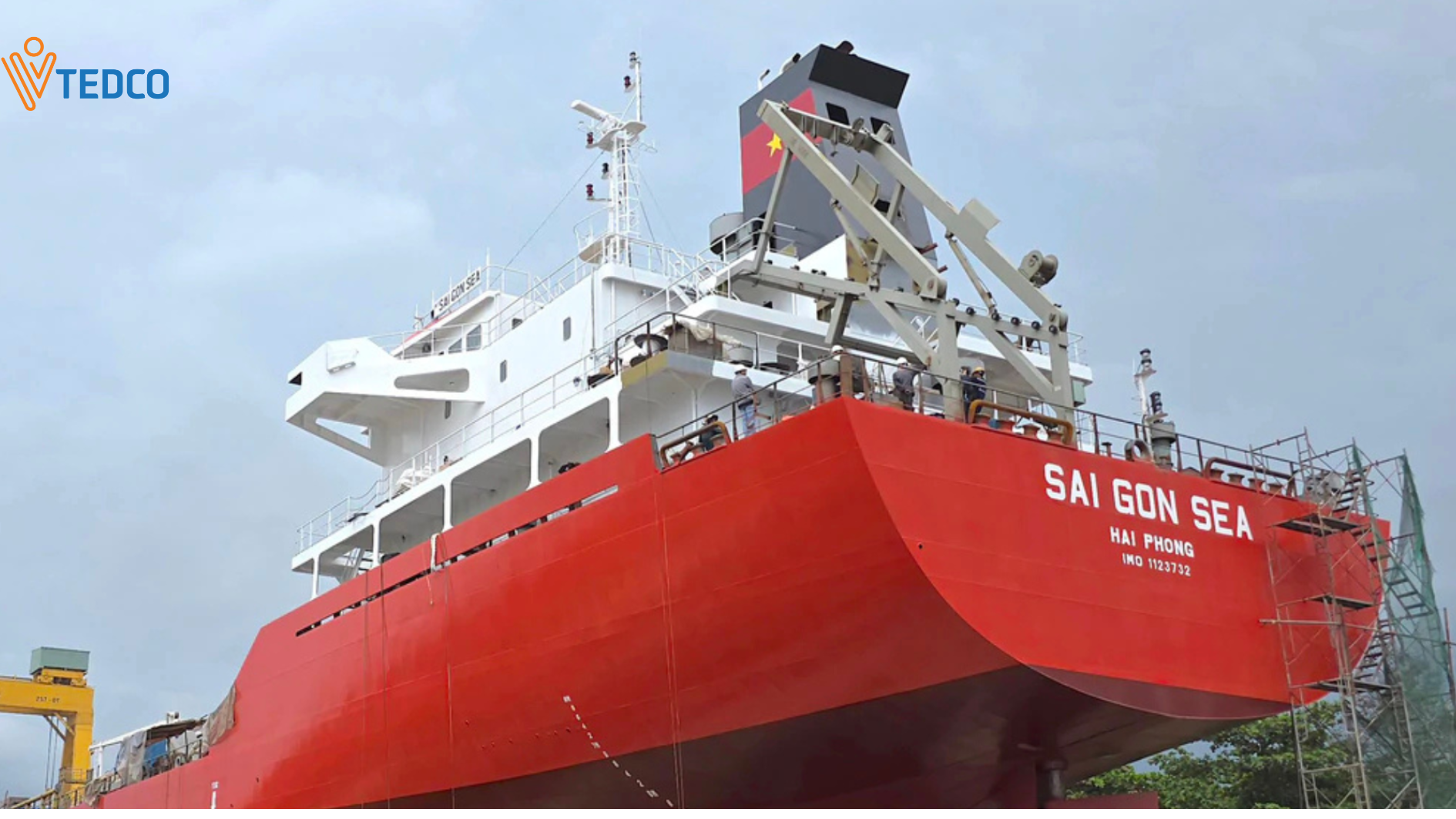

Creating Financial Leverage to Take Vietnam’s Fleet into the Open Seas
The goal of increasing the market share of Vietnam’s shipping fleet from the current 5–8% to 20% by 2030 requires sufficiently strong financial policies to provide shipping companies with the resources to modernize their fleets, expand their scale, and enhance their competitiveness.
Promoting Financial Leverage and Shipping Alliances
The third meeting of the 14th Party Central Committee issued Resolution No. 20-NQ/TW on July 28, 2026, on building and developing Vietnam into a strong maritime nation. The Resolution reaffirmed the determination to develop the maritime economy into an important pillar of the marine economy, laying the foundation for Vietnam to emerge as a major maritime power.

Resolution No. 20-NQ/TW sets the target that by 2030, Vietnamese shipping companies will account for 20% of the country’s import-export cargo transport market, while logistics costs will be reduced to below 12% of GDP.
Shortly thereafter, on August 7, 2026, Resolution No. 218/NQ-CP was issued, promulgating the Government’s Action Program for the implementation of Resolution No. 20-NQ/TW. The Resolution officially translated the Party’s policy directions into specific targets, tasks, and implementation timelines for each ministry, sector, and locality.
The two Resolutions assigned ministries and relevant sectors the urgent task of achieving two key quantitative targets by 2030: increasing the share of Vietnam’s import-export cargo transported by the national shipping fleet to 20% and reducing logistics costs to below 12% of GDP.
These targets are not only measures of the country’s economic self-reliance but also essential requirements for improving the international competitiveness of Vietnamese goods.
At present, Vietnam’s national shipping fleet handles only around 5–8% of the country’s import-export cargo. Most major long-haul maritime trade routes to Europe, North America, and Northeast Asia are dominated by foreign shipping lines.
Increasing the market share from the current 5–8% to 20% by 2030 is therefore a highly challenging task.
This objective cannot be achieved by continuing to rely on partial solutions or conventional approaches. It is time for decisive, coordinated, and responsible action from the Government, relevant ministries and sectors, and the business community to ensure that support policies are implemented effectively, financial barriers are thoroughly removed, and a genuinely favorable business environment is created for domestic shipping companies.
To increase Vietnam’s share of import-export cargo transportation, one of the key solutions is to restructure the country’s import-export trading practices and introduce strong economic incentive mechanisms.
For decades, Vietnamese import-export businesses have followed the practice of “selling FOB and buying CIF,” effectively leaving decisions regarding freight arrangements and cargo insurance to foreign partners.
To regain market share in its own market, the Government needs a strategy to promote and encourage businesses to shift toward the practice of “selling CIF and buying FOB.” When domestic businesses directly negotiate freight rates and designate shipping carriers, they can create a large and stable source of cargo for Vietnam’s national shipping fleet.
At the same time, practical financial, tax, and fee incentives should be introduced. In line with the tasks assigned under Resolution No. 218 regarding the development of maritime financial mechanisms and support for maritime enterprises, the Government should consider introducing VAT and corporate income tax reductions or exemptions, preferential credit policies, and reductions in specific maritime charges for Vietnamese import-export businesses that sign long-term transportation contracts with Vietnamese shipping lines.
The introduction of long-term preferential credit packages with fixed interest rates of 3–5% per year would provide vital financial support for Vietnamese shipping companies, enabling them to invest confidently in fleet modernization.
Such financing could help companies focus on developing large container vessels and specialized chemical, LNG, and LPG carriers that meet increasingly stringent IMO green emission standards.
Promoting cooperation and establishing shipping alliances is also an important solution.
Most Vietnamese shipping companies are small and medium-sized enterprises. If they operate independently, they can easily face pressure from major foreign shipping lines in terms of freight rates and sailing schedules.
The establishment of a national shipping alliance would enable domestic carriers to combine fleet capacity, flexibly coordinate empty containers, optimize shipping routes, and share operational risks.
Close cooperation between shipping alliances and major export industry associations—including seafood, footwear, textiles and garments, and agricultural products—would help consolidate sufficient two-way cargo volumes and strengthen their ability to negotiate competitive freight rates.
Promoting Inland Waterway Development and Reducing Logistics Costs
Transportation costs currently account for as much as 50–60% of Vietnam’s total logistics costs.
The paradox is that road transport carries more than 70% of total cargo volumes, despite being three to five times more expensive than inland waterway transportation.
Since logistics costs include transportation, warehousing and inventory costs, administrative management, and risk-related expenses, shifting freight transportation toward inland waterways should become a top priority in order to reduce logistics costs to below 12% of GDP.
As railway development requires substantial investment and long construction periods and cannot be completed within the next four years, the immediate priority should be to focus resources on upgrading inland waterway infrastructure.
Regarding investment resources, a breakthrough is needed in public investment funding for inland waterway infrastructure.
In line with Resolution No. 218/NQ-CP, which prioritizes public investment in maritime and connectivity infrastructure, the Government should make strategic adjustments to resource allocation by increasing the share of public investment for inland waterway infrastructure from the current modest level of approximately 2% per year to 5–7% of the total annual transportation infrastructure investment budget.
This increased funding should be used to dredge and standardize key river navigation channels, raise the clearance of bridges that currently restrict waterway transport in the Red River Delta and the Mekong Delta, and upgrade river ports and inland container depots (ICDs) with direct connections to deep-water port clusters.
Making full use of Vietnam’s more than 20,000 kilometers of inland waterways and its fleet of over 200,000 river vessels would immediately reduce pressure on road transport, create low-cost waterway transport corridors, eliminate the burden of road tolls, and significantly reduce transportation costs for businesses.
At the same time, operations should be optimized to reduce the problem of “empty trucks and empty barges on return journeys.” One-way empty trips currently increase transportation costs by 40–50%.
In implementing the Action Program under Resolution No. 218/NQ-CP, which promotes digital transformation and the development of five to six modern logistics centers, an urgent solution is to accelerate the adoption of digital technology.
This includes developing a Port Community Single Window system, Transportation Management Systems (TMS), Warehouse Management Systems (WMS), and AI technologies to coordinate transport routes and share data on empty containers among businesses.
Optimizing two-way cargo flows and strengthening connections between cargo owners and shipping companies could immediately reduce direct operating costs by 15–20%, creating a strong foundation in infrastructure and operational efficiency for reducing total logistics costs to below 12% of GDP.
It can be said that increasing the market share of Vietnam’s shipping fleet to 20% and reducing logistics costs to below 12% of GDP within the next four years will not be an easy mission. However, it is entirely achievable with sufficient political determination and practical, effective solutions.
When the Government creates the right policy framework, ministries and sectors remove institutional barriers, and businesses proactively cooperate and create stronger commercial leverage, the maritime economy can achieve significant breakthroughs and help realize Vietnam’s goal of becoming a major maritime nation in the new era.
— Collect —