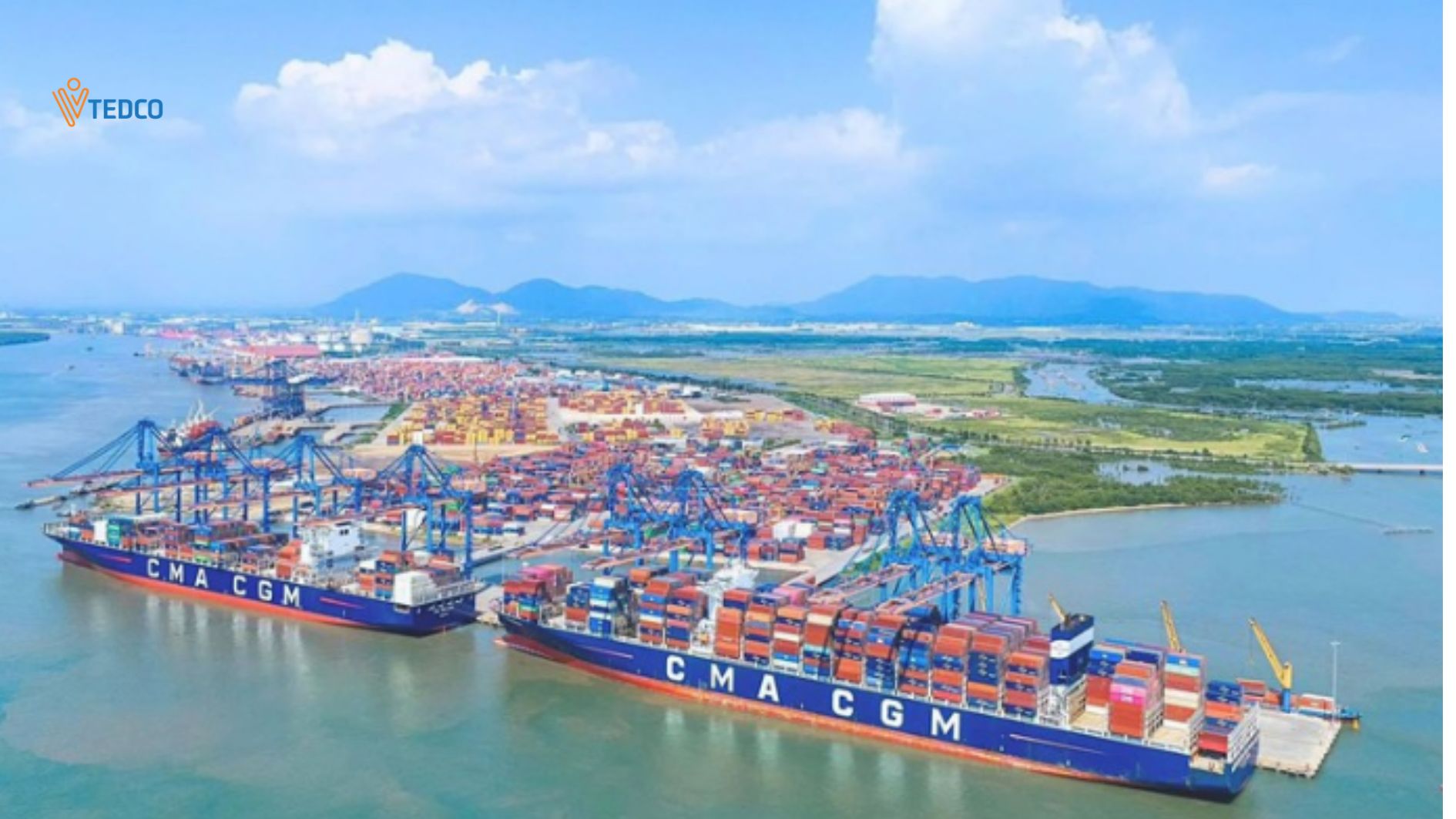

Overseas workers contribute billions of dollars annually.
With a per capita gross national income (GNI) reaching US$4,970 in 2025, Vietnam has surpassed the minimum threshold to be classified as an upper-middle-income country from July 2026.
According to Ms. Nguyen Thi Thanh Mai, Acting Head of the Population and Labor Statistics Department (General Statistics Office), this result is significantly contributed by hundreds of thousands of Vietnamese people working abroad, who send back 5-7 billion USD each year, further strengthening the economy .

Ms. Nguyen Thi Thanh Mai, Acting Head of the Population and Labor Statistics Department (General Statistics Office)
Madam, what has been the contribution of Vietnamese workers going abroad for employment (labor export) to socio-economic development in recent years?
According to the 2025 Labor and Employment Survey conducted by the General Statistics Office, approximately 412,000 Vietnamese workers will be employed abroad during the period 2023-2025. Information from the Department of Overseas Labor Management ( Ministry of Interior ) indicates that around 900,000 Vietnamese workers are currently employed in over 50 countries and territories, contributing approximately 5-7 billion USD in remittances annually. At the current rate of emigration, it is projected that 112,000 Vietnamese workers will be employed abroad under contract throughout 2026.
Remittances from Vietnamese workers abroad are equivalent to the export value of many key industries, and nearly 30% of the total foreign direct investment (FDI) implemented on average over the past five years. This shows that labor export is not only a channel for creating jobs and increasing income, but also a crucial source of foreign currency for the economy. This money has contributed to the annual increase in Vietnam's per capita GNI, reaching US$4,970 by 2025, thereby officially meeting the minimum threshold for Vietnam to be classified by the World Bank as a high-income developing country from July 2026.
 Vietnamese workers abroad make a significant contribution to the economy, sending home $5-7 billion annually.
Besides remittances, what other contributions do returning workers make to the economy, Madam?
Upon returning home, migrant workers bring with them not only remittances but also other important "assets": skills, professional experience, and work ethics accumulated during their time abroad. With proper support to re-enter the labor market, this resource can be further developed, contributing to improving the quality of human resources and promoting socio-economic development.
The General Statistics Office has just completed an in-depth analysis report on the costs incurred by Vietnamese workers to work abroad. The report indicates that 32.6% of returning workers found employment in the private sector; 21.3% started their own businesses, family businesses, or private companies; nearly 8% worked on a daily/hourly wage basis; and over 3% worked in the public sector. The survey by the General Statistics Office shows that nearly 91% of returning workers received at least some form of employment support. Notably, in Hanoi and Ho Chi Minh City, this rate reached 97.7% and 98.4%, respectively.
Encouragingly, 32% of repatriated workers continued in the jobs they had done abroad. Among them, 77% of highly skilled technical workers continued in their previous jobs; nearly 66% were in personal services, security, and sales; and 60.6% were in crafts and related trades. This result shows that a large proportion of repatriated workers are still able to utilize their professional skills and experience, making a significant contribution to the country's economic development.
Despite the large number of exported workers, the quality of this workforce remains largely unchanged?
The aforementioned in-depth analysis report shows that Vietnamese workers abroad are involved in many types of jobs, primarily concentrated in the groups of "unskilled labor," "craftsmen and related trades," "technical workers for assembly and operation of machinery," and "personal service, security, and sales staff." Conversely, jobs requiring higher levels of expertise and research skills, such as "management leadership," "high-level technical expertise," and "mid-level technical expertise," still account for a low proportion.
It's true that if we look purely at the surface statistics, the proportion of migrant workers directly involved in medium- and high-skilled occupations is still quite modest (58.9% in medium-skilled occupations; 8.4% in high-skilled occupations). However, we can assess this based on practical skills and industrial work ethic. Imagine, a worker, even in a simple job in Japan or South Korea , after their time working there, their greatest asset returning home is not just accumulated money, but soft skills, work discipline, and a sense of responsibility in an internationally standardized environment. This is precisely the significant "gap" that the domestic labor market – where the percentage of trained workers with degrees and certificates is currently only around 30% – is desperately lacking.
Therefore, overseas workers are not simply people who send back billions of USD in remittances each year to ensure macroeconomic balances. Upon returning home, they become a high-quality resource, a crucial "launching pad" for labor restructuring, directly serving the goal of rapid and sustainable economic growth.
One issue of concern for workers is the high cost of working abroad. What is the current reality regarding this cost, Madam?
The in-depth analysis report above indicates that in 2025, the average cost a worker will have to pay to work abroad is 125.7 million VND. This is not just a "labor export fee" as people commonly call it. In our statistics, we calculate all the expenses a worker incurs to search for a job, meet recruitment requirements, secure a specific job abroad, travel to the workplace, and start working.
These expenses include costs for completing application documents, passports, visas, medical examinations, training, skills assessments, insurance; fees paid to recruitment organizations or intermediaries; travel, food, and accommodation expenses; and other related costs. If workers borrow money to cover these expenses and pay interest, the financial costs associated with the loan are also included in the statistics. Therefore, people should not interpret the 125.7 million VND as a "service fee".
The amended and supplemented Law on Vietnamese Workers Working Abroad under Contract, recently passed by the National Assembly , contains many provisions protecting the rights of workers, reducing waiting times and costs for workers. Therefore, I believe that in the near future, the amount of money workers have to pay when going abroad for work will decrease.
However, we also need to acknowledge a fact from the In-depth Survey on Migrant Workers: up to 53.9% of workers have to borrow money to cover their emigration costs. Notably, more than half of them (55.4%) have to borrow over 70% of the total costs, with an average loan amount of up to 121.9 million VND.
This represents a significant financial burden when compared to their initial monthly income in their home country. For rural laborers from impoverished households, this additional expense inadvertently becomes a double barrier, posing a major challenge regarding sustainability and financial risk mitigation throughout the contract period.
So, compared to the past, how have the costs of working abroad and the potential return on investment for workers changed?
Compared to 2021, the average cost decreased from VND 164.9 million to VND 125.7 million. This is one of the outstanding positive points of the 2025 results. Not only did costs decrease, but the first-month income of workers in the host country also increased, from VND 22.4 million in 2021 to over VND 28 million in 2025. These two factors changing in a positive direction resulted in a significant decrease in the RCI (Residency Cost Index), from 7.4 to 4.5. In simpler terms, if in 2021 workers needed an average of 7.4 months' income from their first job to cover initial costs, by 2025 this figure would be around 4.5 months. However, we shouldn't just look at the reduction and assume that the cost problem has been solved. The amount of 125.7 million VND is still a very large sum of money for many households, especially young workers and those in rural areas.
Therefore, a comprehensive solution is needed from all three sides: strengthening management, providing financial support, and guiding livelihoods. We not only need to reduce the cost of emigration by making the recruitment market more transparent, but also proactively build information channels, provide preferential loan packages from the outset, and prepare plans to support them in finding quality jobs upon their return. Only then will the 125.7 million VND no longer be a risky gamble, but truly become a worthwhile investment in the future of young workers.
_Collect_