
Proposal for New Regulations to Improve the Effectiveness of Inland Waterway Disaster Prevention and Response
The Ministry of Construction is seeking public comments on a draft Circular regulating disaster prevention and response in the inland waterway sector. The draft introduces several important new provisions, ranging from infrastructure management to duty and shift arrangements.
Greater Focus on the Safety of Inland Waterway Infrastructure
One of the new features of the draft Circular is the addition of specific regulations on disaster prevention responsibilities for the system of navigation locks, floating docks, slipways, and ship launching ramps.
These provisions are intended to ensure compatibility with the current structure and conditions of Vietnam’s inland waterway transport infrastructure.

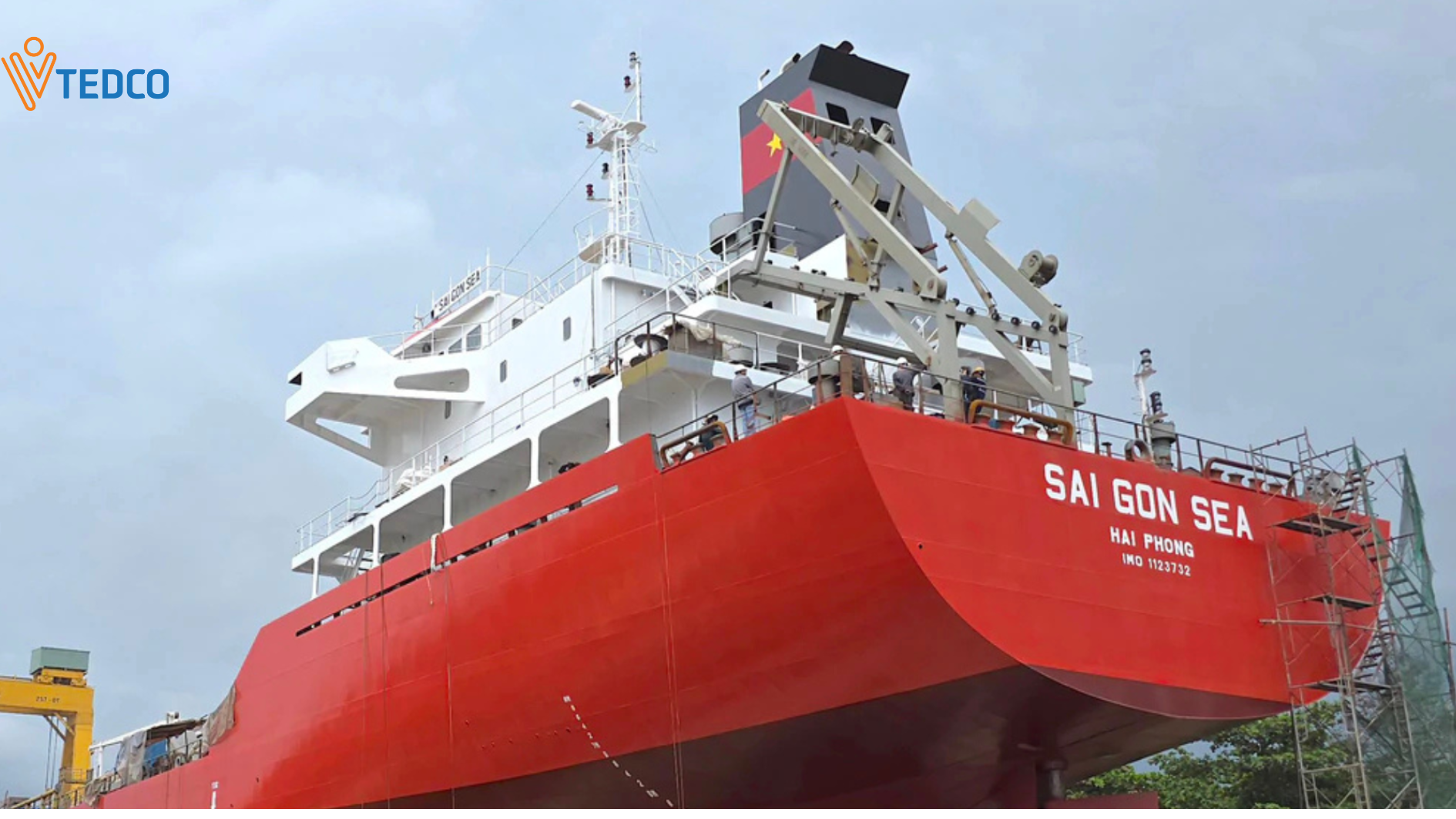
The draft Circular on disaster prevention and response in the inland waterway sector proposes a number of new regulations aimed at better reflecting practical conditions and improving the effectiveness of disaster preparedness and response. (Illustrative image)
Accordingly, for navigation locks serving passing vessels, the managing authorities must develop detailed disaster prevention and response plans. Specific tasks include reinforcing, securing, and stabilizing equipment, machinery, control buildings, and material storage facilities. In particular, dredging cranes must be safely secured, while lightning protection systems and electrical and mechanical systems must undergo rigorous inspections.
Regarding operational procedures, the draft proposes that when wind speeds exceed prescribed limits, relevant units must issue navigation restriction notices, guide vessels to safe anchorage areas, and close the locks in accordance with regulations.
In addition to infrastructure-related measures, the draft also revises regulations on working and rest schedules for disaster prevention and response activities. Specifically, during natural disasters or sudden flooding events, duty operations must be organized on a 24-hour basis.
Another notable proposal is to change the current two-shift daily duty system to a three-shift system, including public holidays. The shifts would be divided as follows: Shift 1 from 6:00 a.m. to 2:00 p.m.; Shift 2 from 2:00 p.m. to 10:00 p.m.; and Shift 3 from 10:00 p.m. to 6:00 a.m. the following day.
Explaining the proposal, the drafting authority stated that the three-shift arrangement would ensure consistency with current legal regulations while helping duty personnel maintain better physical health and mental well-being, enabling them to respond more effectively to natural disasters.
Regarding the commencement of duty operations, the draft stipulates that agencies and enterprises will base their decisions on forecasts and warnings issued by competent meteorological and hydrological authorities or on instructions from higher-level authorities.
In cases where there are no specific instructions, duty operations must be established no later than 24 hours before a tropical depression or storm is forecast to directly affect the managed area.
This provision is intended to address shortcomings in the current regulations, which impose a fixed 24-hour requirement. In practice, many official dispatches issued by the Prime Minister or provincial-level People’s Committees require duty operations to begin earlier—36 hours, 48 hours, or immediately after the issuance of the official dispatch.
The proposed change would ensure greater consistency with disaster response and management mechanisms based on the actual development of natural disasters.
Prioritizing the Rapid Restoration of Navigation
Another important aspect of the draft is the redefinition of disaster recovery operations.
The new draft defines Step 1—emergency recovery—for inland waterways as activities including the removal and handling of sunken vessels, the clearance of shoals and obstructions, and the temporary reopening of navigation channels to ensure the safe passage of vessels.
Compared with the current regulations, which define Step 1 primarily as the repair of damaged infrastructure and allow recovery activities only after the disaster has weakened, the new proposal takes a more proactive approach.
Accordingly, as soon as a vessel sinks or an obstruction appears that restricts navigation, the responsible unit must immediately implement traffic control and regulation measures to ensure navigation safety and prevent collisions or drifting incidents.
In the event of a blocked navigation channel, the competent state management authority will directly direct and mobilize relevant agencies and units to coordinate the design, construction, and supervision of recovery measures in order to restore navigation activities as quickly as possible.
According to the drafting authority, these new proposals are intended not only to ensure consistency and alignment with the current legal framework but also to establish a more practical, safer, and more effective operational process for Vietnam’s inland waterway sector in response to the growing challenges of climate change.
_Collect_