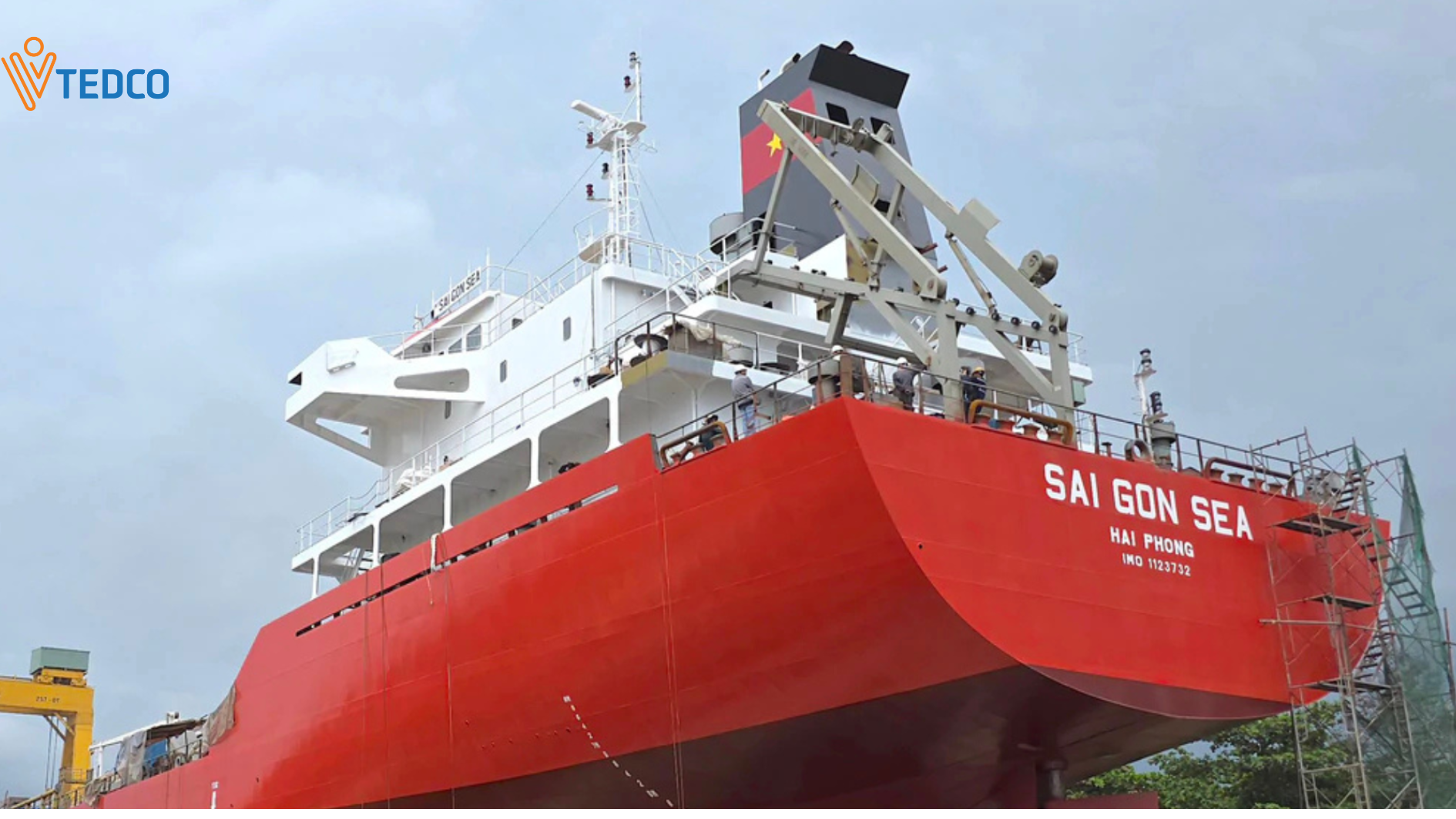

Shipbuilding Industry – The “Backbone” of National Maritime Capacity
With plans to establish three concentrated shipbuilding industrial zones across the North, Central, and South, Vietnam is laying the foundation for an integrated maritime ecosystem in which the shipbuilding industry serves as the “backbone,” strengthening national self-reliance and competitiveness.
Establishing “Three Key Hubs” for a National Maritime Industrial Network
On July 28, 2026, Resolution No. 20-NQ/TW issued by the 14th Party Central Committee outlined a strategic vision to develop Vietnam into a strong maritime nation, one that prospers from the sea and possesses leading regional competitiveness in marine industries.

The plan to establish three concentrated shipbuilding industrial zones across the North, Central, and South is of particular importance. These zones should be developed as “three key hubs” within a national maritime industrial network.
One of the key priorities of the Resolution is to develop the maritime economy into an important pillar of the marine economy, creating the foundation for Vietnam to rise as a major maritime nation.
In particular, the shipbuilding industry is expected to develop through an integrated ecosystem approach, closely connected with the merchant fleet, inland waterway vessels, port systems, logistics, supporting industries, and related services. Development should follow an environmentally friendly direction and enable Vietnam to participate more deeply in global value chains.
Earlier, Notice No. 125-TB/VPTW, dated July 18, 2026, issued by General Secretary and State President To Lam, also identified the development of maritime industries, including shipbuilding, as a strategic task aimed at strengthening Vietnam’s national maritime capacity.
This development is closely associated with greater autonomy in transportation and logistics, supply chain security, and national defense and security, thereby strengthening the country’s overall capacity at sea.
These policies are regarded as important guiding principles that could mark a new turning point for the development of Vietnam’s maritime sector, including the shipbuilding industry.
Speaking with Xay dung (Construction) Newspaper, Mr. Le Do Muoi, Director General of the Vietnam Maritime and Waterway Administration, said that at the end of June, the Ministry of Construction approved adjustments to the Master Plan for Vietnam’s Maritime Infrastructure for the 2021–2030 period, with a vision toward 2050.
Notably, the revised plan provides strategic direction for the establishment of three concentrated shipbuilding industrial zones in the North, Central, and South of Vietnam.
According to the plan, in the North, the area along the right bank of the Van Uc River in Hai Phong is expected to serve as a key development location. The area benefits from its position within the northern seaport and industrial development zone and its connectivity with Lach Huyen, Nam Do Son, and major production centers.
In the Central region, Van Phong in Khanh Hoa Province has been selected as the proposed location. The area offers significant advantages in terms of water surface availability, natural conditions, and proximity to international shipping routes.
These characteristics make Van Phong particularly suitable for large-scale shipbuilding industrial facilities that require extensive land and water areas, as well as the capacity to accommodate large vessels.
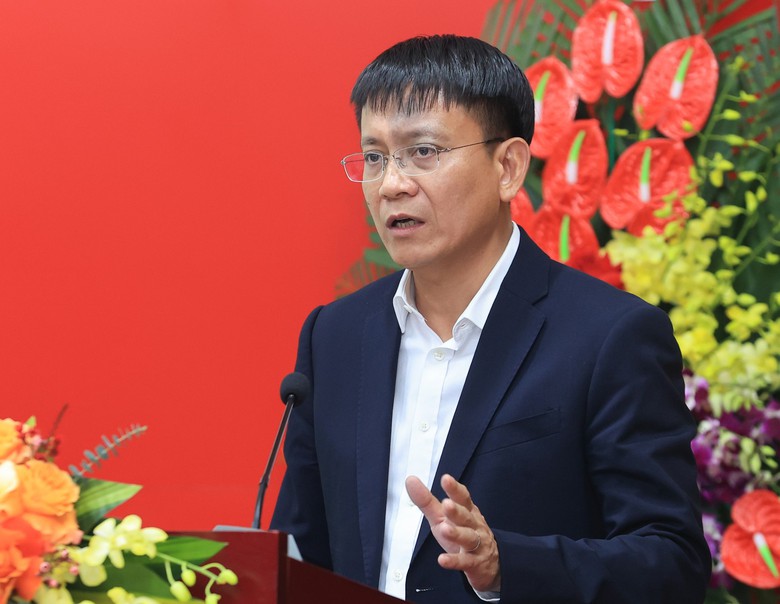
Mr. Le Do Muoi, Director General of the Vietnam Maritime and Waterway Administration.
In the South, the proposed locations within the Ho Chi Minh City area are Hiep Phuoc and Tan Hai Ward, situated within the development area of the Cai Mep–Thi Vai and Can Gio international gateway port systems.
This area offers particular advantages in terms of market access, seaports, logistics, and industry, creating the potential for direct linkages between the shipbuilding industry, Ho Chi Minh City’s port system, and the southern logistics network.
“This is of great significance in realizing the objectives that have been set. These are not simply three separate areas planned for independent development; rather, they must be organized as ‘three key hubs’ within a national maritime industrial network,” Mr. Muoi said.
The establishment of these concentrated zones will create an integrated value chain: seaports create the market; shipping fleets generate demand; the shipbuilding industry provides shipbuilding and repair capacity; supporting industries create added value; logistics provides connectivity; while science, technology, and human resources build competitiveness.
This can also be regarded as the “industrial backbone” of Vietnam’s national maritime capacity, enabling the country not only to have ports capable of receiving vessels and fleets capable of transporting cargo, but also to gradually develop the capacity to design, build, repair, and master technologies needed to maintain its fleets and other marine vessels.
Preserving Long-Term Development Space for the Shipbuilding Industry
One of the key concerns of the leadership of the Vietnam Maritime and Waterway Administration is the need to protect land and water resources for the development of the shipbuilding industry.
Shipbuilding is a highly specialized industry that requires extensive land and water areas for the construction of facilities, workshops, and storage yards for fabrication, shipbuilding, repair, assembly, launching, outfitting, and adjacent supporting industrial zones. These areas must also ensure optimal logistics efficiency and sufficient space for long-term expansion.
Therefore, site selection cannot be based solely on the availability of land but must meet a range of stringent criteria.
Mr. Le Do Muoi emphasized that the planning of these concentrated shipbuilding industrial zones must simultaneously consider several key criteria: natural conditions and access to the sea; the ability to establish dedicated navigation channels and water areas; connectivity with seaports and transportation networks; the potential to develop supporting industrial and logistics supply chains; and the capacity for expansion, green development, digital transformation, environmental protection, and national defense and security through to 2050.
A groundbreaking feature of this planning initiative is the concept of planning “development space for concentrated shipbuilding industrial zones.” This space is intended not only for activities directly related to shipbuilding, repair, and dismantling, but also for supporting industries, logistics, technical infrastructure, and connecting transport corridors.
To ensure sufficient land and water resources, dedicated navigation channels, and large-scale logistics space for the long-term development of shipbuilding industrial zones, the Vietnam Maritime and Waterway Administration has suggested that local authorities coordinate and align the preparation and implementation of relevant planning schemes, including land-use planning and provincial planning, with the approved maritime sector master plan.
“During the implementation of the planning process, local authorities must adopt measures to protect land and water resources that are of strategic importance to the maritime industry, avoiding their use for short-term purposes that could limit the space needed for the development of the highly specialized shipbuilding industry,” the leadership of the Vietnam Maritime and Waterway Administration affirmed.
With thorough preparation and the coordinated implementation of comprehensive solutions, Vietnam’s shipbuilding industry is expected to become sufficiently competitive on the international stage and serve as a strong pillar supporting the sustainable development of the marine economy.
— Collect—