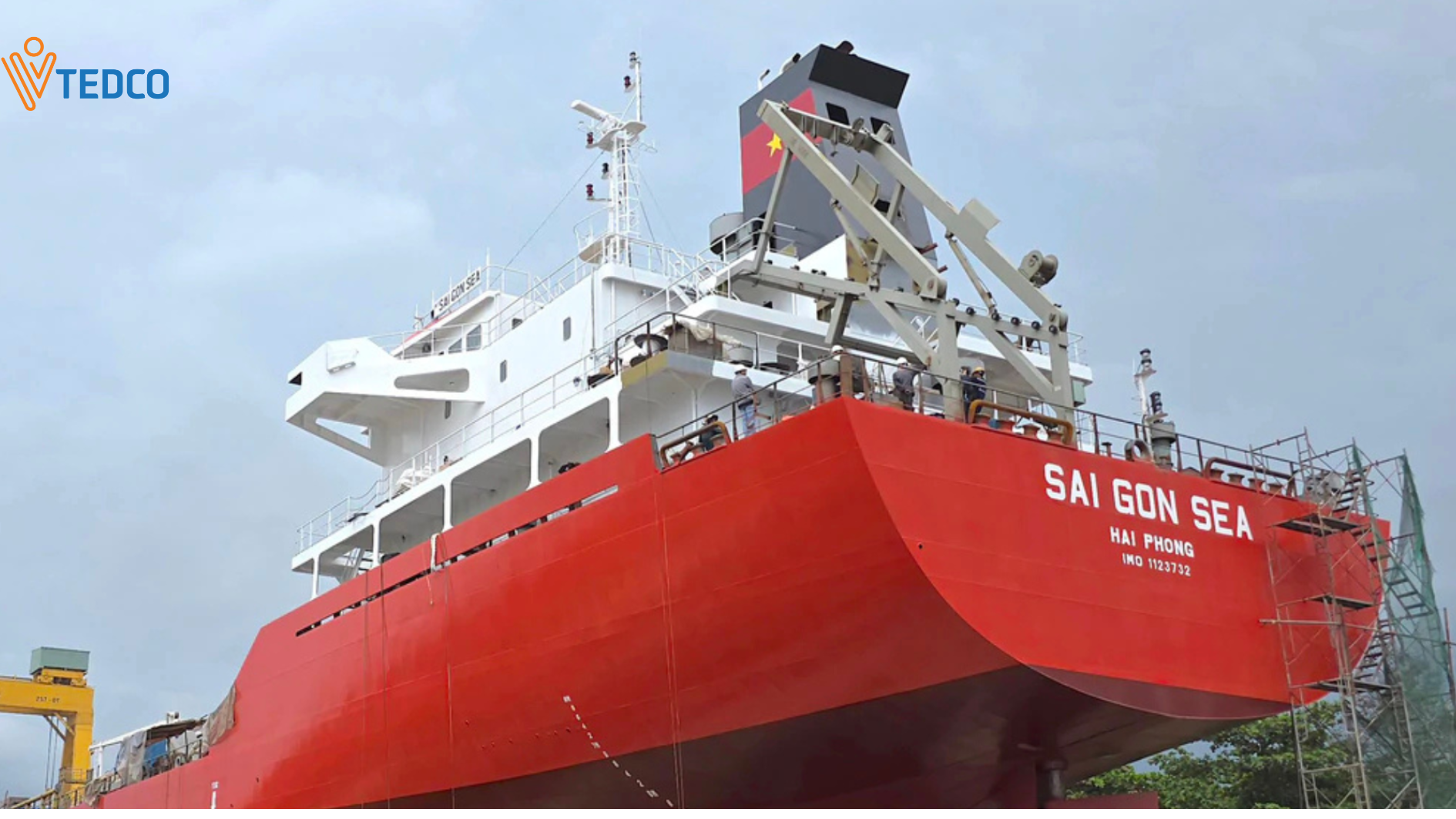

Vietnam’s Maritime Giants Regain Momentum as Billion-Dollar Profits Return
A recovering shipping market, fleet restructuring and more flexible vessel deployment are helping major Vietnamese maritime companies deliver a strong rebound in earnings, although performance across the sector remains uneven.
Major Shipowners Post Strong First-Half Results
Vietnam’s maritime sector delivered a markedly stronger financial performance in the first half of 2026, with several major shipping and port operators reporting substantial gains in revenue and profitability.
Vietnam Maritime Corporation (VIMC) emerged as one of the strongest performers. The group generated consolidated revenue of VND 6.439 trillion ($245 million) in the second quarter, up 39% year on year, while profit after tax surged 77.5% to VND 1.154 trillion ($44 million).
For the first six months of the year, VIMC’s consolidated profit reached VND 2.016 trillion ($77 million), almost twice the level recorded in the same period of 2025.

The group’s core port and shipping businesses also maintained solid operating momentum. Cargo throughput across VIMC’s port network reached 89.82 million tonnes during the first half, while its maritime transport operations handled 12.67 million tonnes. The figures represented 50% and 53%, respectively, of the company’s full-year 2026 targets.
Vietnam Ocean Shipping Joint Stock Company (Vosco) also staged a significant turnaround. The company reported first-half revenue of VND 1.649 trillion, up 23.6% year on year. More notably, Vosco posted a net profit of VND 42.8 billion, reversing a net loss of VND 43.4 billion in the same period last year.
Hai An Transport and Stevedoring Joint Stock Company likewise continued to deliver strong growth. Second-quarter net revenue rose 20.31% year on year to VND 1.533 trillion, while net profit increased 12.62% to VND 466.6 billion.
For the first half, Hai An reported revenue of VND 2.798 trillion and net profit of VND 817.6 billion, representing year-on-year increases of 14.5% and 18.8%, respectively.
Not all operators, however, benefited from the market recovery. Dong Do Maritime Joint Stock Company recorded net revenue of more than VND 50.3 billion in the second quarter but remained in the red, with a net loss of more than VND 1.1 billion. The company had reported a net profit of more than VND 20 billion a year earlier.
Dong Do said it would focus on maximizing fleet utilization, expanding its customer base and securing additional cargo volumes in an effort to improve freight earnings and revenue. Cost-cutting measures targeting vessel operations and corporate overheads will also remain a priority.
Fleet Restructuring Pays Off
For shipping companies, fleet strategy has emerged as a key factor behind the improvement in earnings.
Vosco attributed its turnaround in part to an aggressive fleet restructuring programme. Between July 2025 and April 2026, the company disposed of the Vosco Star and Vosco Unity and returned the product tanker Dai Phu.
At the same time, Vosco expanded its bulk carrier fleet through a combination of vessel acquisitions and chartering arrangements. The company added a series of Supramax vessels, including Vosco Starlight, Vosco Sunlight, Vosco Jubilant, Vosco Prosper, Vosco Defender, Vosco Trader and Vosco Unity, along with the chemical tanker Dai Vinh.
The Vosco Ocean entered commercial operation in May 2026, further strengthening the company’s fleet capacity. The timely deployment of additional tonnage enabled Vosco to respond more effectively to market opportunities while supporting its financial recovery.
Hai An’s growth has also been supported by fleet expansion. The company deployed the Haian Iris in October 2025, adding capacity to its container shipping operations.
Higher average freight rates, together with emergency bunker surcharges (EBS), provided a further boost to revenue and profitability.
Freight Market Recovery Provides Tailwind
The improved performance of Vietnamese shipping companies reflects a broader recovery in global container shipping markets.
According to Drewry, the World Container Index (WCI) jumped 23% in the first week of June 2026 to $3,433 per FEU.
Rates on the Shanghai–Los Angeles trade climbed 31% to $4,565 per FEU, while the Shanghai–Rotterdam route increased 25% to $3,579 per FEU.
Seatrade Maritime attributed the sharp increase in freight rates to an earlier-than-expected peak season, persistent port congestion and geopolitical disruptions that reduced effective shipping capacity.
Tensions around the Strait of Hormuz also pushed fuel costs higher, placing additional pressure on operators of oil and chemical tankers as well as dry bulk vessels during the early months of the year.
Vietnamese shipping companies, however, moved quickly to capitalize on improving market conditions. The recovery in the dry bulk segment from late March provided operators with an opportunity to improve vessel utilization and strengthen earnings.
Container carriers also responded by adjusting freight rates and introducing peak-season surcharges across major East–West trades, helping to lift margins and improve overall financial performance.
Strategic Flexibility Becomes a Competitive Advantage
The first-half results suggest that the recovery in the maritime market alone does not explain the stronger performance of Vietnamese shipping companies.
Fleet composition, vessel deployment and the ability to respond quickly to changing freight markets have become increasingly important differentiators.
For major operators such as VIMC, Vosco and Hai An, the combination of stronger freight markets, targeted fleet restructuring and flexible commercial strategies has created a significant earnings tailwind.
Yet the contrasting performance across the sector also highlights the continued volatility of the shipping industry. For smaller or financially constrained operators, higher fuel costs, fluctuating freight rates and vessel operating expenses remain significant challenges.
As global trade patterns continue to evolve, Vietnamese shipowners will need to balance fleet expansion with disciplined cost management and flexible deployment strategies to sustain the recovery through the remainder of 2026.
_Collect_