
Working abroad allows you to learn skills and become a highly skilled worker.
According to Deputy Minister of Home Affairs Vu Chien Thang, workers sent abroad to work are there to learn techniques, improve their skills, and become high-quality workers.
Going abroad is for studying.
On August 13th, a delegation from the Ministry of Interior, led by Deputy Minister Vu Chien Thang, inspected the organization of the Korean language proficiency test for workers applying to work in South Korea under the EPS program (Employment Cooperation Program) in Ho Chi Minh City.
The exam was organized by the Center for Overseas Labor ( Ministry of Interior ) in collaboration with the Human Resources Development Agency of Korea (HRD Korea) at the exam location: College of Technology No. 2.
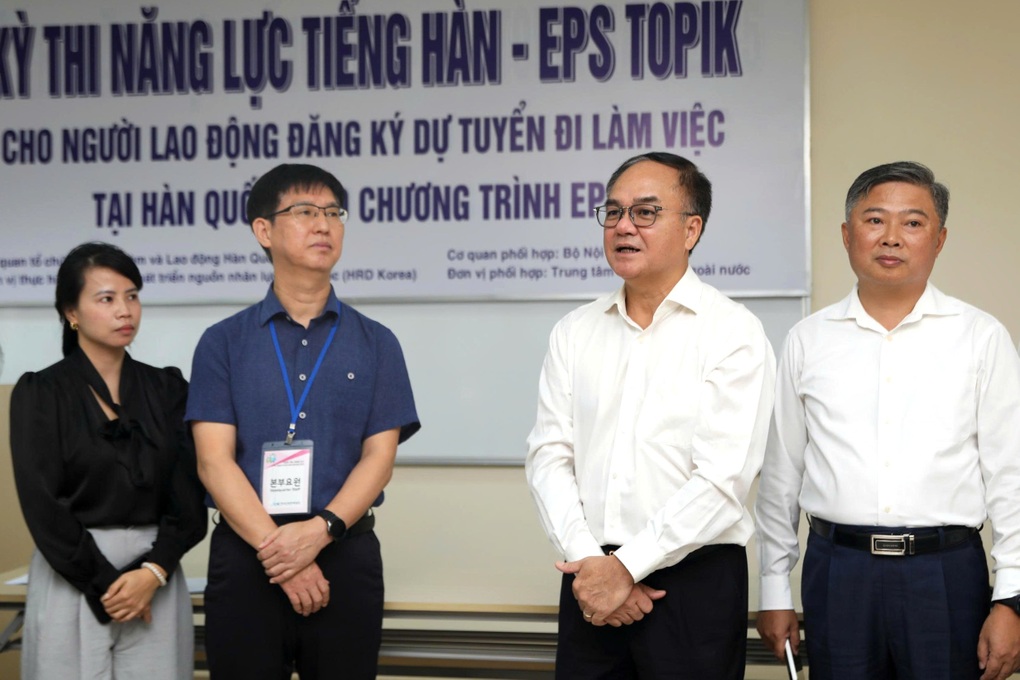
The delegation from the Ministry of Interior inspects the organization of the Korean language exam at College of Technology No. 2 (Photo: Bao Quyen).
During discussions with representatives from HRD Korea, Deputy Minister of Home Affairs Vu Chien Thang highly appreciated the quality of the selection exams for workers going to South Korea organized by HRD Korea, ensuring fairness and transparency. Through these exams, a high-quality workforce has been selected to work, study, and improve their skills in South Korea.
According to the Deputy Minister, Vietnam's current approach to sending workers abroad is no longer labor export but rather labor dispatch. Workers dispatched must receive training in foreign languages, culture, and vocational skills to build a foundation for performing their jobs well overseas. They must also learn new techniques and technologies, and develop a disciplined work ethic to improve their skills.
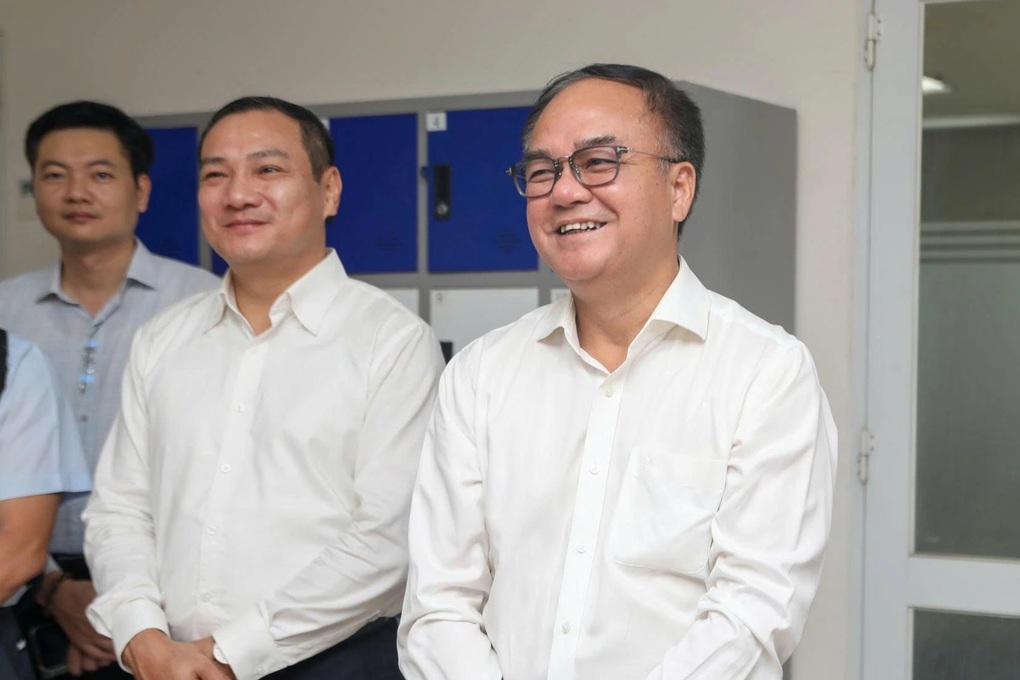 Deputy Minister Vu Chien Thang encourages the exam candidates (Photo: Bao Quyen).
Sharing his thoughts with the exam candidates, Deputy Minister Vu Chien Thang analyzed: "Vietnam is experiencing strong economic development, especially in high-tech industries such as semiconductors, electronics, and chemicals... To achieve development goals and make the country rich and powerful, we need a high-quality workforce with high skills and advanced technology."
The goal of sending Vietnamese workers to South Korea is not only for employment, high income, and improved living standards, but more importantly, to acquire solid skills, receive education and training in an industrially advanced country, and continue to improve their skills and learn industrial work ethics. After completing the dispatch program, each worker can return and utilize their new skills, develop their career, and continue to contribute to their country.
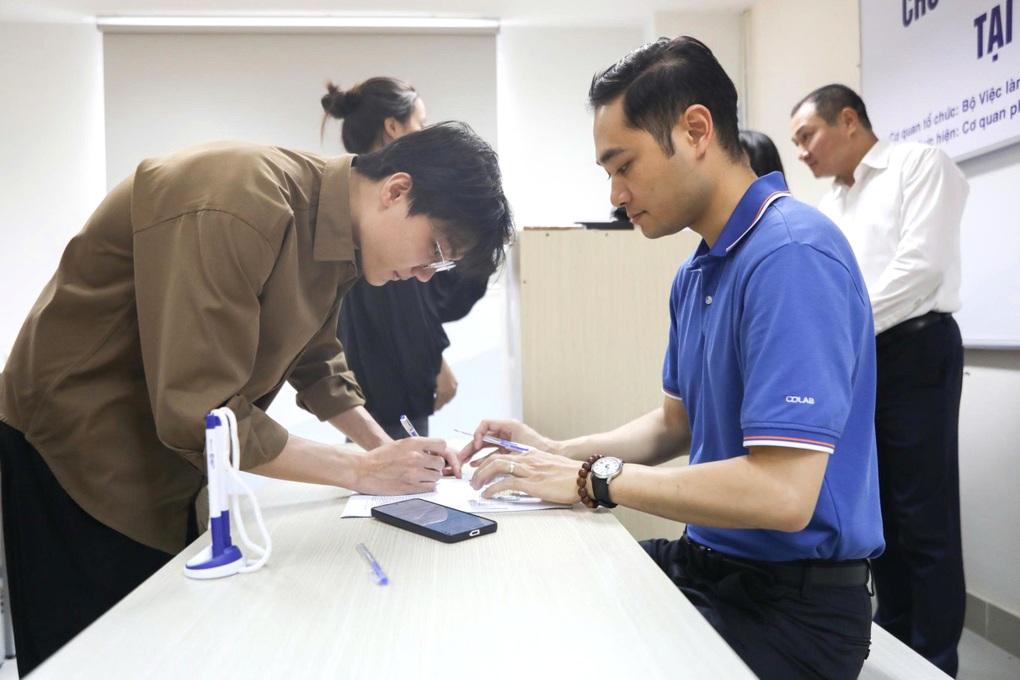
Candidates present their identification documents for verification before entering the examination room (Photo: Bao Quyen).
According to Deputy Minister Vu Chien Thang, the years spent in South Korea will be a "golden time" for candidates to learn skills in a high-quality working environment, determining the success or failure of each individual's career upon returning home.
Vocational training is also a path to becoming a high-quality worker.
Le Thi Bich Ngan was one of the candidates participating in the exam on August 13th. Ngan comes from the rural area of Vinh Long and chose to go to South Korea to work in the manufacturing industry from the very beginning.
According to Ngan, she chose to go to South Korea because she has loved the country, its culture, and its people since she was a child, not just to work abroad for a higher salary.
Therefore, Ngan invested time in learning Korean, choosing to participate in the EPS program with the hope of being able to work in South Korea, further develop her professional skills, language abilities, and relationships in that country to advance her own career upon returning to Vietnam.
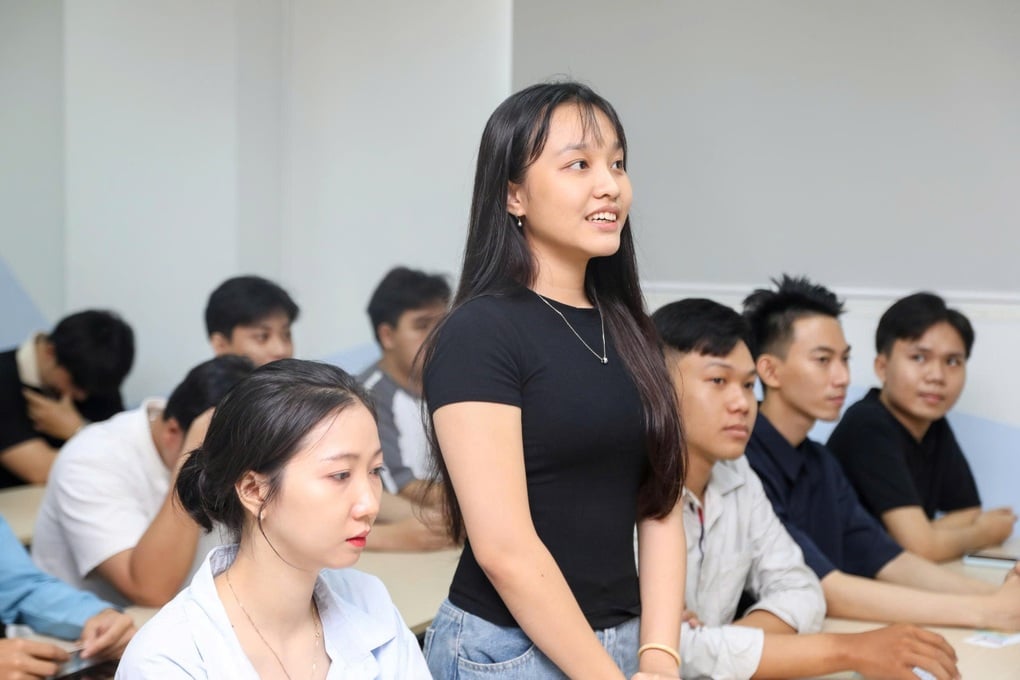
Bich Ngan shared her plans (Photo: Bao Quyen).
During the survey of the candidates on August 13th, Deputy Minister Vu Chien Thang highly appreciated the professional quality of the applicants. Most of the candidates were young people with good Korean language skills and test results, with over 65% achieving 120 points or more (qualifying for employment in South Korea), and the highest score reaching 200 points.
Speaking with a reporter from Dan Tri newspaper , Deputy Minister Vu Chien Thang said: “Looking at the quality of today's candidates, it's clear from the start that they have chosen the path of working abroad, learning skills, and improving their expertise as a way to start their own businesses. Currently, there are many paths for young people to choose from. Learning vocational skills is also a way to become a high-quality worker, develop their careers, and contribute to society.”
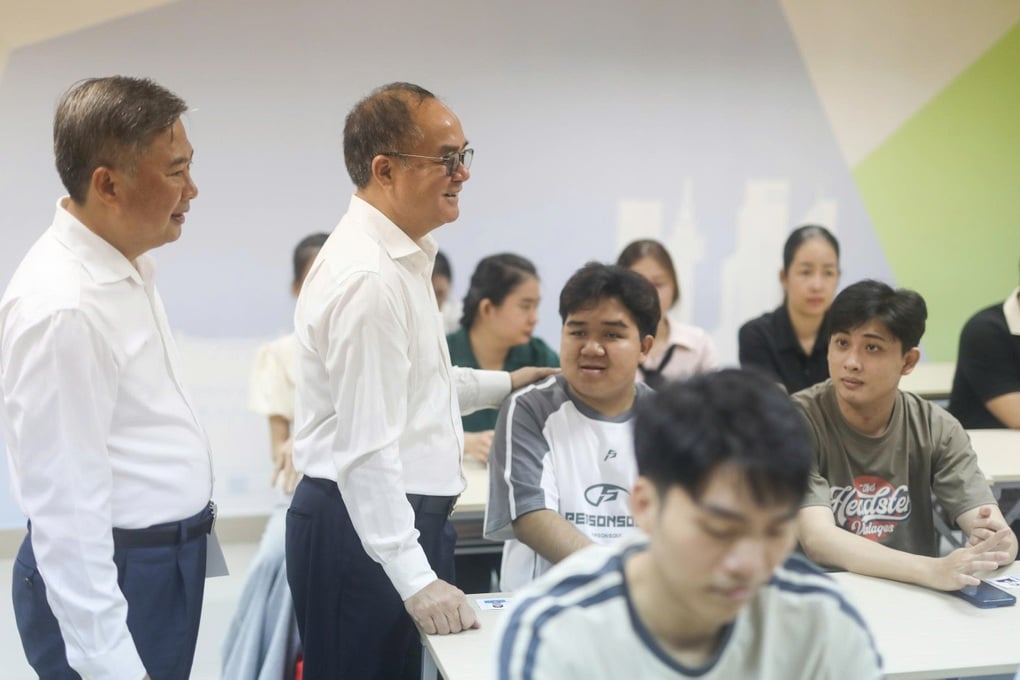 Deputy Minister Vu Chien Thang highly appreciated the quality of the candidates participating in today's exam (Photo: Bao Quyen).
According to Mr. Dang Huy Hong, Director of the Center for Overseas Labor, since the implementation of the EPS Program, the center has sent more than 150,000 workers to South Korea. Vietnam is currently the leading country in sending workers to South Korea under this program.
To implement the EPS Program in 2026, the center coordinated with the Departments of Internal Affairs of provinces and cities to receive 9,613 applicants, including 8,373 applicants for the manufacturing sector, 1,105 applicants for the fisheries sector, 94 applicants for the forestry sector, and 41 applicants for the service sector.
The Center for Overseas Labor, in collaboration with HRD Korea, organized three testing locations in Hanoi , Da Nang, and Ho Chi Minh City. The Ho Chi Minh City testing location had one computer-based testing room, accommodating a maximum of 48 people per session, with four testing sessions held daily.
_Collect_